
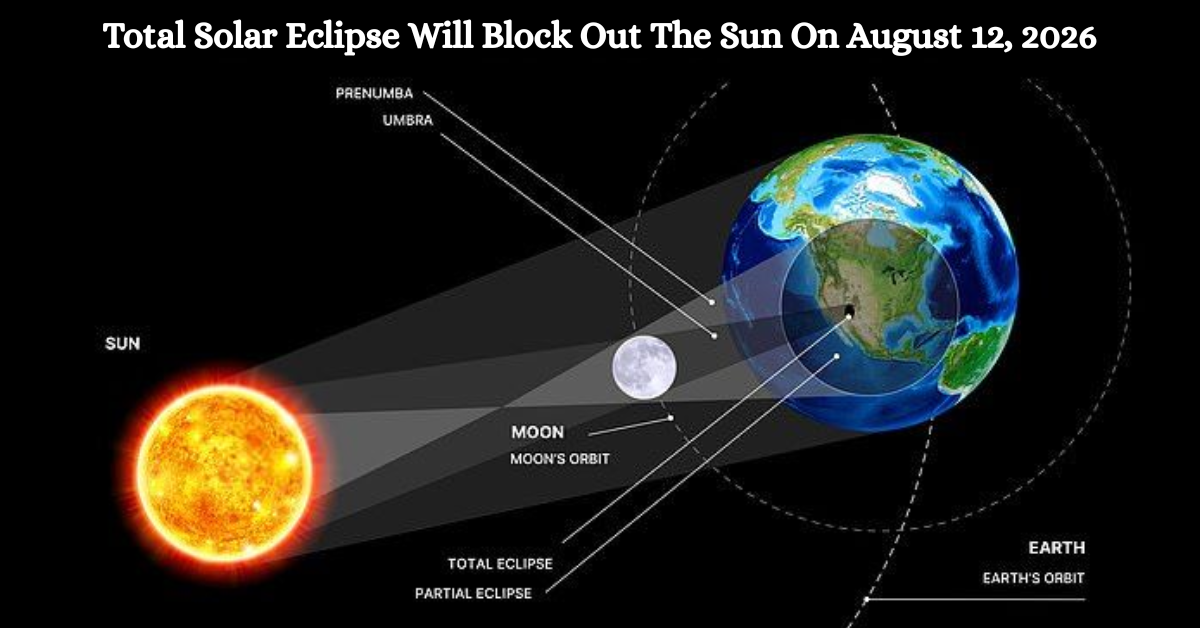

Introduction: Total Solar Eclipse of August 12, 2026, a Spectacular Astronomical Event-
Table of Contents
August 12, 2026, will be a very special day for those interested in astronomy and space. A total solar eclipse will be visible in many parts of the world on this day, and is considered one of the most significant astronomical events of this decade. When the Moon passes between the Sun and Earth and completely obscures the Sun, the day will be plunged into darkness for a brief period, creating a rare sight in the sky. This is why this eclipse has generated tremendous excitement among scientists, astronomy enthusiasts, photographers, and the general public worldwide.
A total solar eclipse is not only a spectacular natural phenomenon but also a significant opportunity for scientific research. During this time, scientists can conduct in-depth studies of the Sun’s corona (outer atmosphere) and other solar activities. For astronomy enthusiasts, it could prove to be a once-in-a-lifetime experience.
In this article, you’ll learn all the important details about the total solar eclipse of August 12, 2026, including what it is, which countries it will be visible in, whether it will be visible in India, how to view it safely, and the scientific facts surrounding it. If you’re looking for accurate and complete information about this rare astronomical event, this article will be helpful.
What is a Total Solar Eclipse?
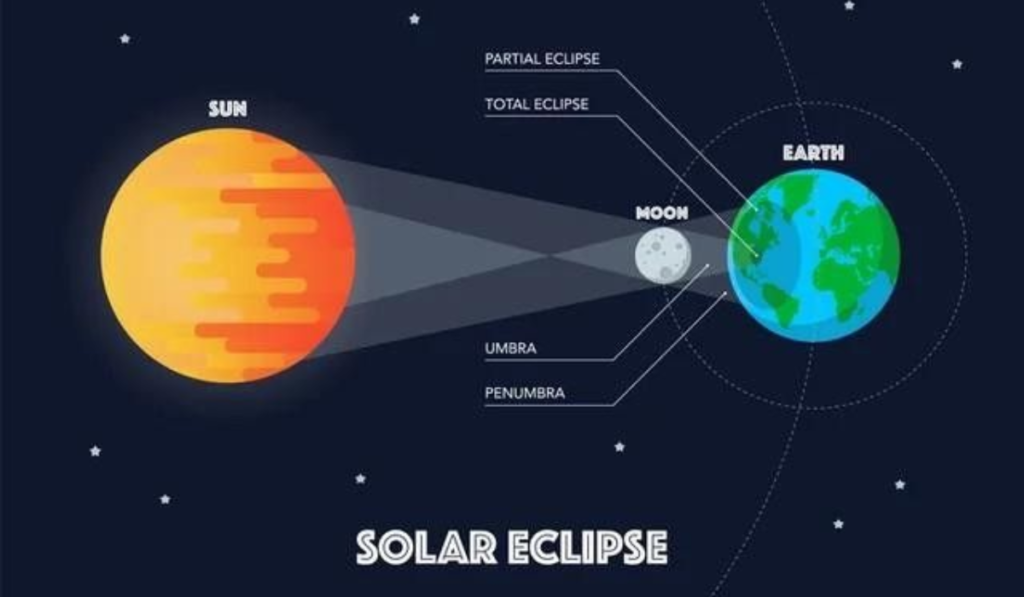
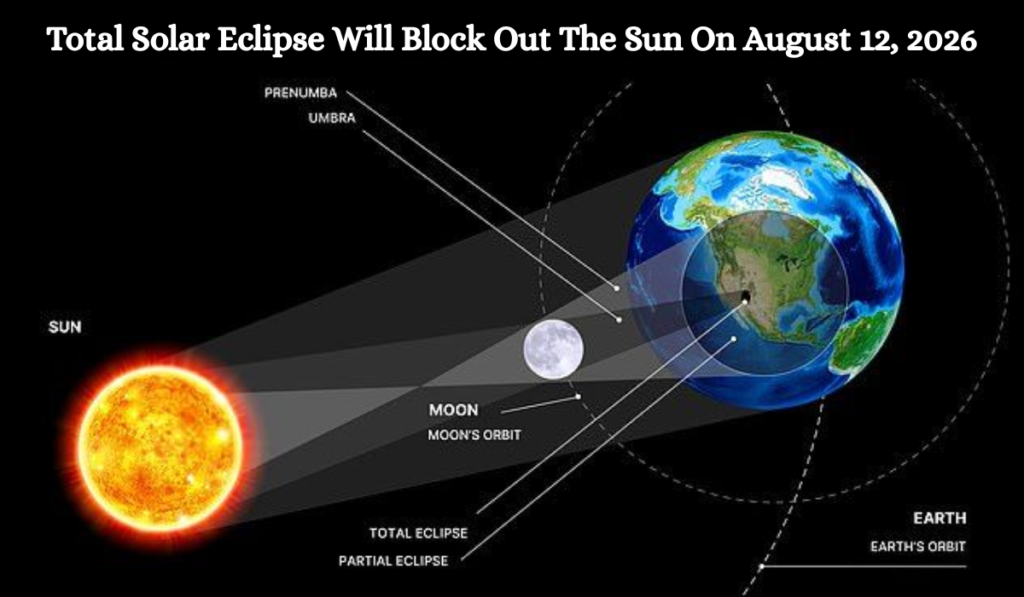
A solar eclipse is an astronomical event that occurs when the Moon passes between the Earth and the Sun, partially or completely blocking sunlight. This phenomenon is possible only on a new moon, but a solar eclipse does not occur on every new moon because the Moon’s orbit is slightly tilted relative to Earth’s.
When the Sun, Moon, and Earth are nearly in a straight line, the Moon’s shadow falls on Earth, resulting in a solar eclipse. A total solar eclipse is observed where the Sun is completely obscured by the Moon’s shadow.
There are three main types of solar eclipses. In a total solar eclipse, the Moon completely obscures the Sun, causing a temporary period of darkness during the day, and the Sun’s outer atmosphere, called the corona, becomes visible. In a partial solar eclipse, the Moon obscures only a portion of the Sun. An annular solar eclipse occurs when the Moon is relatively far from Earth and cannot completely cover the Sun, resulting in a bright ring of fire around the Sun.
A total solar eclipse is considered the rarest and most spectacular because the Sun’s corona is clearly visible, and for a few minutes, daytime appears like night. This unique spectacle makes it one of the world’s most exciting astronomical events.
Key Information about the Total Solar Eclipse of August 12, 2026-
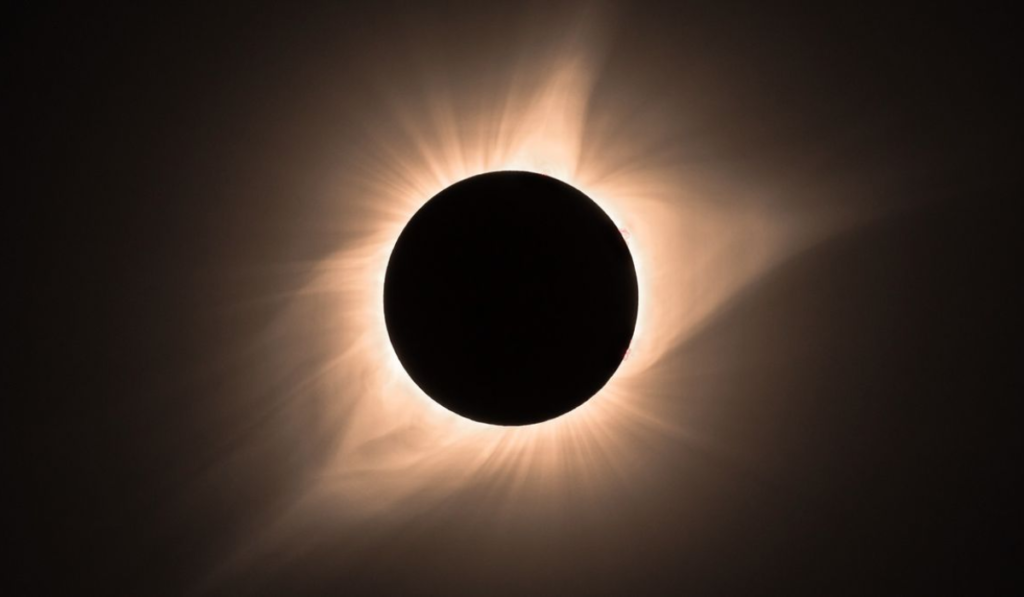
A spectacular total solar eclipse will be visible on August 12, 2026, and is considered one of the most significant astronomical events of the year 2026. This eclipse will be fully visible from the North Atlantic region, Greenland, Iceland, Spain, parts of Russia, and a small area of Portugal. A partial solar eclipse will also be visible in many areas of Europe, northwestern Africa, and North America.
According to astronomical calculations, this eclipse will reach its maximum phase around 15:34 UTC (Coordinated Universal Time) on August 12, 2026. The total duration of the eclipse will vary by location, with the most significant phase of the total eclipse, called Totality, lasting a maximum of approximately 2 minutes and 18 seconds. In most locations, the duration of totality is expected to be between 1 and 2 minutes.
This solar eclipse is extremely important from an astronomical perspective because during totality, the Sun’s bright outer atmosphere, called the Solar Corona, is clearly visible. Scientists use this opportunity to study the Sun’s structure, magnetic activity, and the behavior of the corona. Furthermore, this eclipse holds special significance for mainland Europe, as a total solar eclipse will be visible from some areas of Europe for the first time since 1999.
For this reason, the total solar eclipse of August 12, 2026, will not only be a spectacular natural spectacle but also an important opportunity for scientific research and astronomical studies.
In Which Countries will the August 12, 2026, Solar Eclipse be Visible?
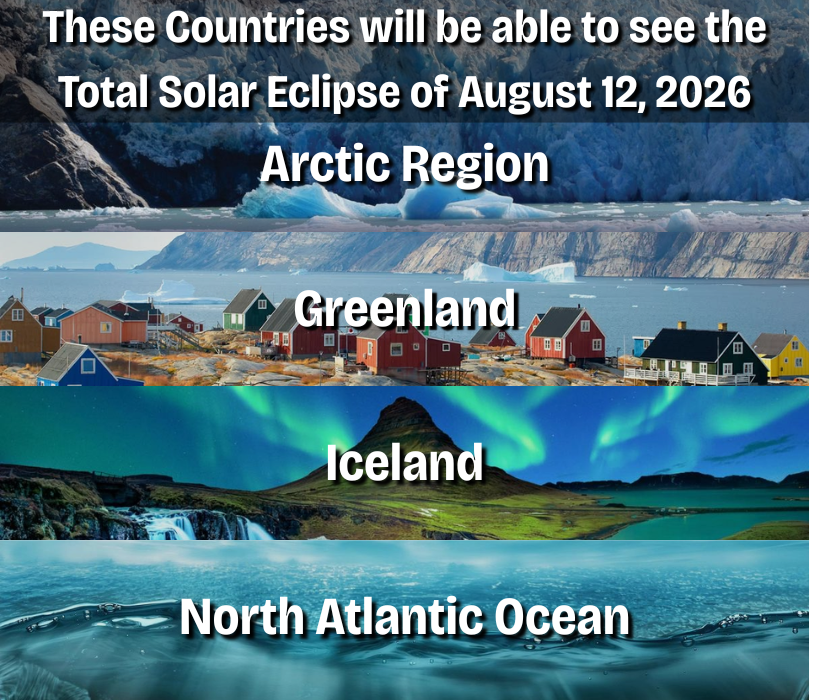
The August 12, 2026, total solar eclipse will be fully visible in select areas of the world. The most important area in any total solar eclipse is called the “Path of Totality.” This is the narrow strip on the Earth’s surface where the Moon completely obscures the Sun. Only in this area will people have the opportunity to witness the spectacular view of a total solar eclipse.
The path of totality of the August 12, 2026, eclipse will pass through many parts of the Northern Hemisphere. The eclipse will first be visible in the Arctic region and then proceed over Greenland, Iceland, and the North Atlantic Ocean. The eclipse path will then enter Europe, where Spain will be one of the most important places to view this celestial event. The total solar eclipse is expected to be clearly visible in many cities and regions of Spain, prompting astronomy enthusiasts and tourists from around the world to prepare to arrive there.
Apart from this, a total solar eclipse will also be visible in some parts of Portugal and in limited areas of Russia. Whereas in some areas of Europe, North-West Africa, and Asia, this event will be visible as a partial solar eclipse.
The most popular places to view the eclipse are considered to be the northern and eastern parts of Spain, some areas of Iceland, and Greenland. If the weather is favorable in these places, the viewers can get a spectacular experience of the solar corona, darkness during the day, and other rare views of the eclipse. This is why the total solar eclipse of August 12, 2026, is among the most-awaited astronomical events internationally.
Will this Solar Eclipse be Visible in India?
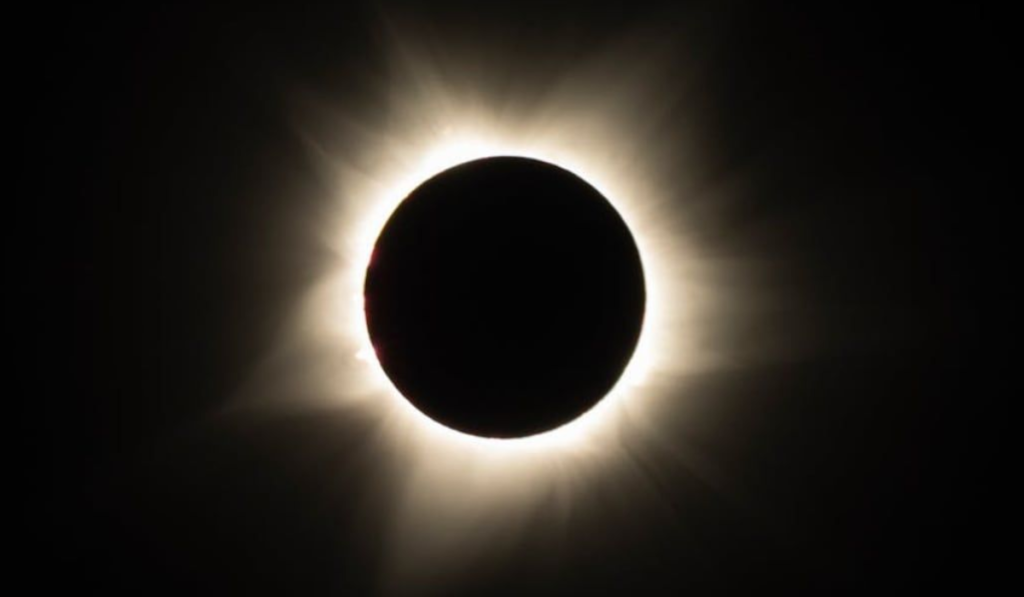
The total solar eclipse of August 12, 2026, will not be visible in India. The path of totality will primarily pass through Greenland, Iceland, Spain, and the North Atlantic region, making it impossible to see directly from any part of India. Therefore, Indian viewers will have to travel abroad or rely on online channels to witness this celestial event.
However, despite the eclipse not being visible in India, this event will be of significant importance to those interested in astronomy. Space agencies, observatories, and astronomy institutes around the world are likely to broadcast the eclipse live. This will allow Indian viewers to witness the spectacular views of the various phases and totality of the eclipse from the comfort of their homes via the internet.
This is a great opportunity for Indian astronomy enthusiasts to understand the scientific information related to the eclipse and receive updates from reliable sources. Watching live programs from international astronomical organizations and scientific institutions during the eclipse will provide a deeper understanding of this rare phenomenon. Also, it will be useful to keep an eye on information about future solar eclipses visible from India.
Why is this Solar Eclipse So Special?
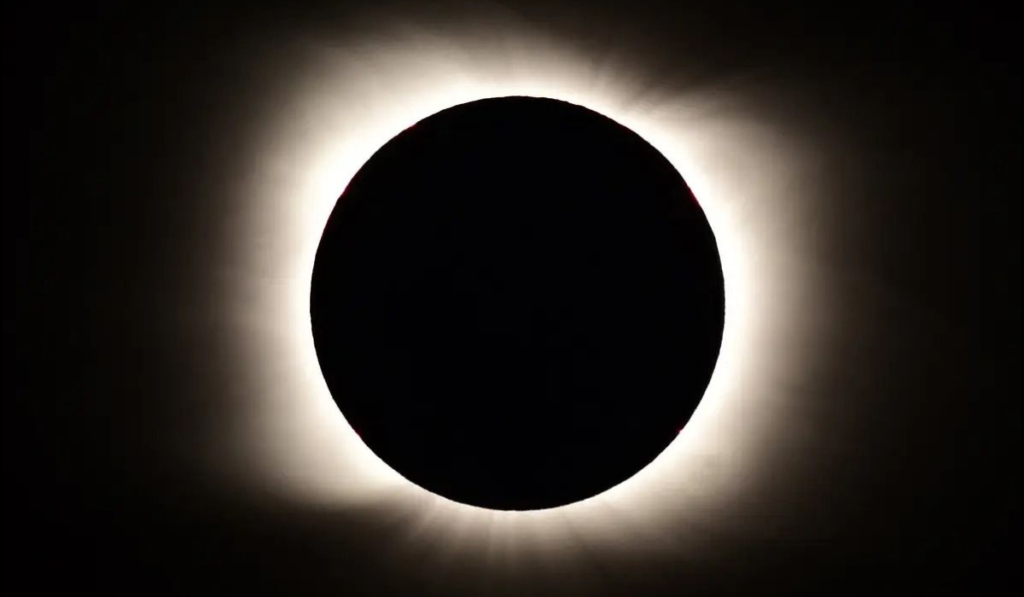
The total solar eclipse of August 12, 2026, holds special significance in the world of astronomy for several reasons. It is not just a normal astronomical event, but a unique confluence of scientific research, public observation, and a rare natural experience. Significantly, many parts of Europe, especially Spain, will witness a total solar eclipse for the first time since 1999. This is why astronomy enthusiasts and scientists worldwide are focused on this event.
This eclipse is also significant compared to previous major solar eclipses because its path of totality will pass through areas where a large number of people will be able to directly witness it. This will provide scientists with the opportunity to obtain more observational data and give the public a chance to experience this rare phenomenon.
During a total solar eclipse, the Sun’s outer atmosphere, called the solar corona, is clearly visible. Under normal circumstances, the Sun’s intense brightness obscures the corona, but during the few minutes of totality, scientists can study its temperature, structure, and magnetic activity. This information plays a crucial role in understanding solar storms and space weather.
Furthermore, the sudden darkness during the day, the visible glowing corona in the sky, and the subtle changes in the atmosphere during this eclipse make it an extremely rare and exciting experience. This is why the total solar eclipse of August 12, 2026, is considered a research opportunity for scientists and a wonderful display of nature for the general public.
What is Visible in the Sky during a Solar Eclipse?
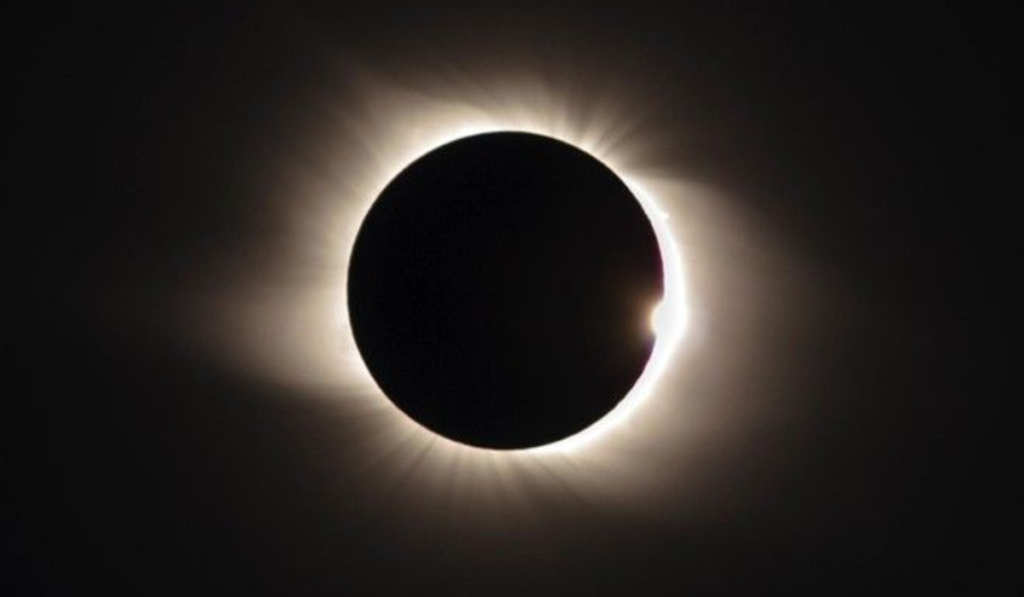
During a total solar eclipse, the sky exhibits many sights that are unseen on a normal day. When the Moon completely obscures the Sun, darkness suddenly descends even during the day. For a few minutes, the atmosphere feels as if it were evening or night. This experience makes a total solar eclipse even more exciting.
During the most important phase of the eclipse, called totality, the Sun’s outer atmosphere, the solar corona, becomes visible. This is a layer of white, bright light surrounding the Sun, which is invisible under normal circumstances due to the Sun’s intense brightness. The corona is considered one of the most fascinating features of a total solar eclipse.
A slight drop in temperature may also be observed during the eclipse as sunlight is temporarily diminished. In many places, people feel a chill in the atmosphere. Changes in the behavior of animals and birds are also observed. Some birds begin to return to their nests, while many animals, recognizing it as evening, become quiet.
In addition, the unique 360-degree twilight on the horizon, the planets shining in the sky, and the suddenly changing natural environment make this celestial event even more spectacular. These scenes make a total solar eclipse one of nature’s most fascinating wonders.
How to View a Solar Eclipse Safely?
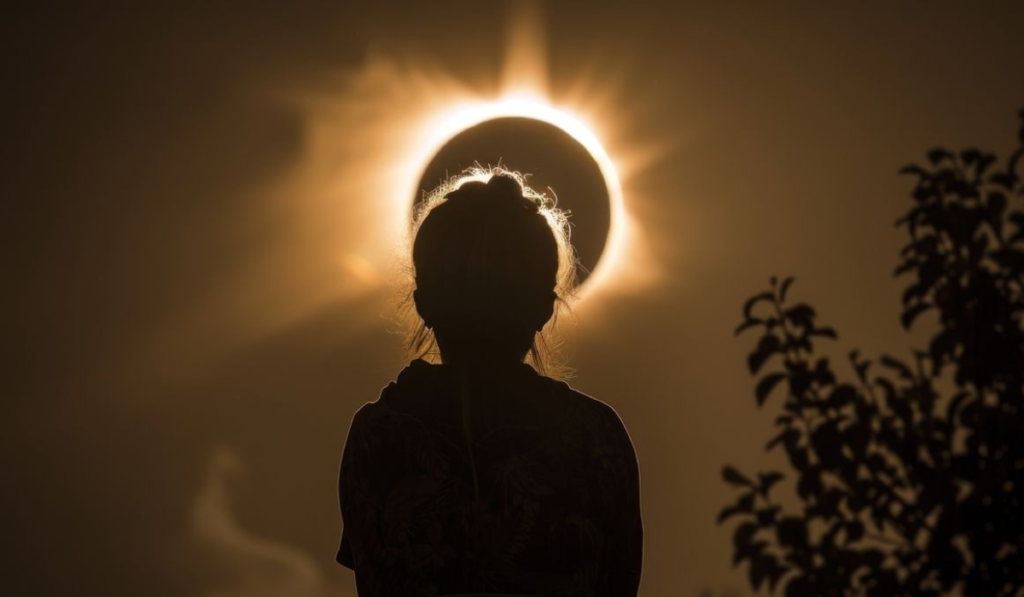
A solar eclipse is a fascinating astronomical event, but special care must be taken when observing it. Looking directly at the sun can cause serious damage to the retina, as the sun’s intense ultraviolet (UV) and infrared rays can permanently affect the eyes. Therefore, no phase of the eclipse should be viewed without proper protection.
Only eclipse glasses certified to ISO 12312-2 standards should be used to view the solar eclipse. Ordinary sunglasses, X-ray film, colored glass, camera film, or other homemade solutions are not sufficient to protect the eyes. Eclipse glasses should not be used if they are scratched or damaged.
If you plan to view the eclipse with binoculars, a camera, or a telescope, it is mandatory to use special solar filters. Looking at the sun without these devices can cause immediate, serious eye damage and even damage to the equipment.
Children and the elderly require special supervision while viewing the eclipse. Children should always be allowed to view the eclipse under adult supervision, and safety glasses should be worn properly.
Indirect viewing methods, such as pinhole projectors, are also considered useful for safe observation. According to scientists, a solar eclipse can be enjoyed completely safely by following proper safety measures.
Myths and Scientific Facts about Solar Eclipse-
| Popular Myths | Scientific Facts |
| A solar eclipse is inauspicious and spreads negative energy. | A solar eclipse is a natural astronomical phenomenon in which the Moon temporarily blocks the Sun’s light. There is no scientific evidence linking it to good or bad fortune. |
| Pregnant women should not go outside during a solar eclipse. | No scientific research has proven that a solar eclipse has any direct effect on pregnant women or unborn babies. |
| Eating food during a solar eclipse can cause health problems. | There is no scientific evidence that eating food during a solar eclipse is harmful. Food remains safe to consume. |
| Food cooked during a solar eclipse becomes contaminated. | A solar eclipse does not affect the quality, safety, or nutritional value of food. |
| Going outside during a solar eclipse is dangerous. | Being outdoors is not dangerous. However, looking directly at the Sun without proper eye protection can seriously damage your eyes. |
| All activities should be stopped during a solar eclipse. | A solar eclipse has no scientific impact on daily activities, and people can continue their normal routines. |
| Solar eclipses cause natural disasters. | No scientific connection has been established between solar eclipses and earthquakes, floods, volcanic eruptions, or other natural disasters. |
| Water and food spoil during a solar eclipse. | A solar eclipse does not alter the composition or safety of water and food. |
| Viewing a solar eclipse always causes blindness. | Eye damage can occur only if you look directly at the Sun without proper protection. Certified eclipse glasses make eclipse viewing safe. |
| A solar eclipse is a mysterious or supernatural event. | A solar eclipse is a completely natural and predictable astronomical event caused by the alignment of the Sun, Moon, and Earth. |
Key Takeaway: Many beliefs about solar eclipses are based on cultural traditions and folklore. While such traditions may hold cultural significance, scientific evidence shows that a solar eclipse is a predictable natural event that can be safely observed with proper precautions.
The Importance of Solar Eclipses for Astronomy-
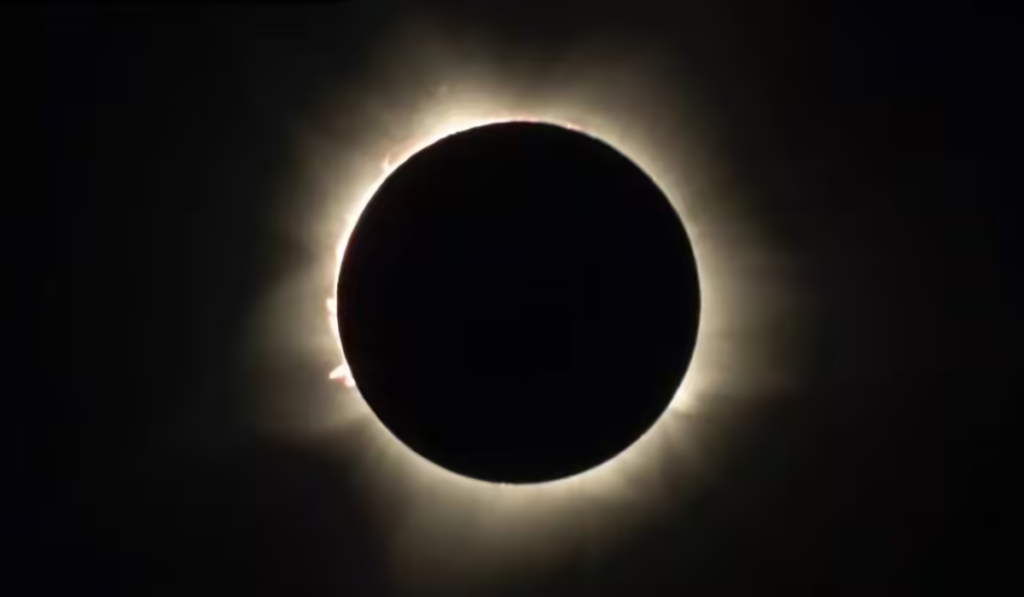
Solar eclipses are not only a fascinating natural phenomenon but also provide extremely important scientific opportunities for astronomy. When the Moon completely obscures the Sun during a total solar eclipse, scientists have the opportunity to study parts of the Sun that are not visible on normal days due to its intense brightness.
In particular, during an eclipse, the Sun’s outer atmosphere, the Solar Corona, is clearly visible. Scientists analyze the corona’s structure, temperature, magnetic fields, and activities within it. Studying the corona helps to better understand solar flares, coronal mass ejections (CMEs), and space weather.
Information obtained from solar eclipses also contributes significantly to space research. Sun activity can impact Earth’s communication networks, satellites, GPS systems, and power grids. Therefore, scientists study these events to better predict potential solar impacts in the future.
A total solar eclipse is a rare and valuable opportunity for scientists, as it allows them to make observations during the few minutes of totality that would not be possible under normal circumstances. This is why solar eclipses hold special significance for both astronomy and space science.
How to Photograph a Solar Eclipse?
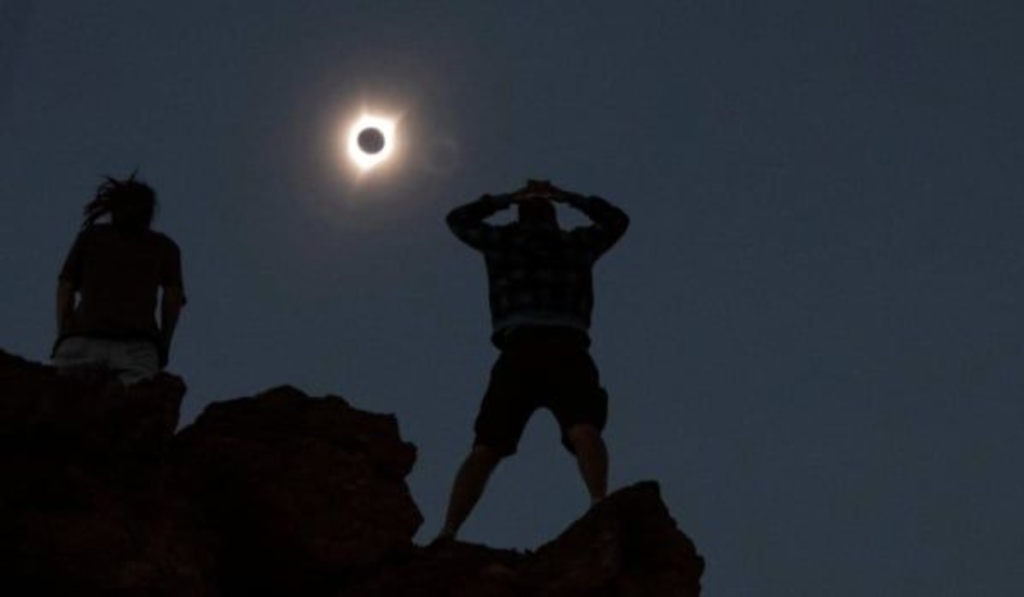
Photographing a solar eclipse can be an exciting experience, but it’s crucial to have the right equipment and safety precautions in place. A DSLR or mirrorless camera, a telephoto lens, a sturdy tripod, and a remote shutter are ideal for better images. A lens with a long focal length helps capture sharper and more detailed images of the sun.
It’s best to use a low ISO (100–200), a fast shutter speed, and manual focus when photographing the sun. It may also be necessary to adjust exposure settings according to the different phases of the eclipse.
Using a solar filter is essential when photographing the sun. This filter protects the camera sensor and lens from intense sunlight. Photographing the sun directly without a solar filter can damage camera equipment.
For safety, never look at the sun through the camera’s viewfinder without a proper filter. With the right preparation and precautions, you can safely capture the stunning views of the solar eclipse with your camera.
When will the Next Major Solar Eclipse Occur in the Future?
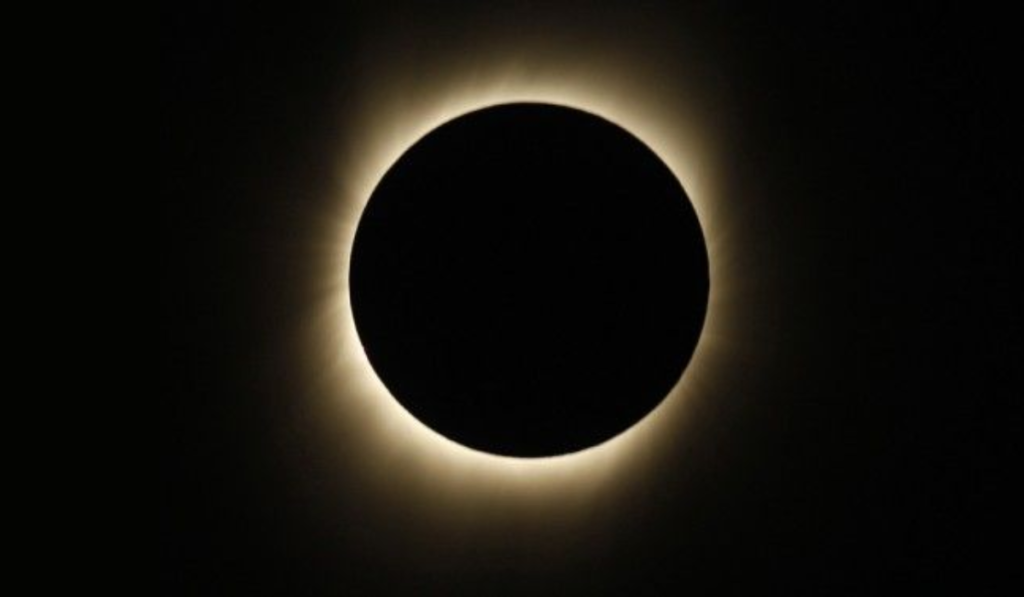
After the total solar eclipse of August 12, 2026, the next major opportunity for astronomy enthusiasts will be the total solar eclipse on August 2, 2027. This eclipse will be visible especially in North Africa, the Middle East, and some Asian regions. Its special feature is that the duration of totality (total eclipse) may exceed 6 minutes, making it one of the longest total solar eclipses of the 21st century.
There will be many more solar eclipses in the coming years, including total, partial, and annular eclipses. Keeping an eye on the eclipse calendar is useful for those interested in astronomy, as it allows them to plan ahead for future important astronomical events.
A solar eclipse is not only a natural spectacle but also an opportunity to learn and enhance scientific understanding. Therefore, it is always beneficial for astronomy enthusiasts to stay informed about upcoming eclipses.
If you’re looking for information on educational topics, be sure to check out our website, edublog.cloud. Additionally, for digital products, be sure to check out our other website, vijaybooks.store.
Information related to the Powassan Virus is also available on this website.
Frequently Asked Questions (FAQs) Total Solar Eclipse of August 12, 2026-
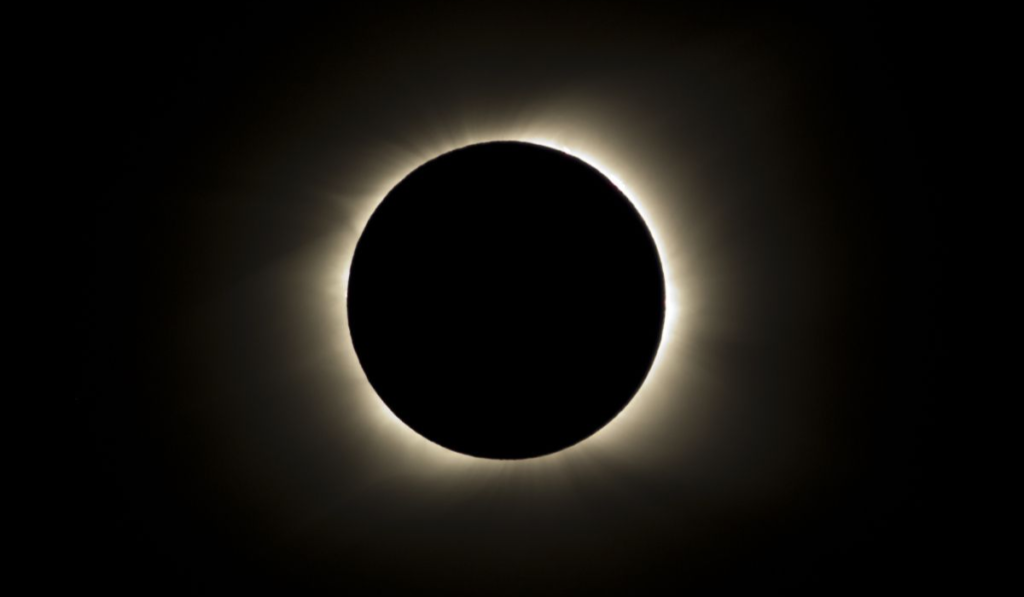
Where will the total solar eclipse of August 12, 2026, be visible?
The total solar eclipse of August 12, 2026, will be visible primarily in Greenland, Iceland, Spain, the North Atlantic region, and parts of Russia. The path of totality in these areas will allow people to view the full solar eclipse. A partial solar eclipse will also be visible in many parts of Europe, northwestern Africa, and surrounding areas.
Will this solar eclipse be visible in India?
No, the total solar eclipse of August 12, 2026, will not be visible in India. The full path of the eclipse will be far from India. However, Indian viewers will be able to view this event through live broadcasts by various international observatories and scientific institutions.
How long does a total solar eclipse last?
The total duration of a total solar eclipse can vary depending on the location. In the August 12, 2026, eclipse, the totality phase, i.e., the phase of complete observance of the Sun, can last for a maximum of about 2 minutes and 18 seconds. In most locations, this duration is expected to last between 1 and 2 minutes.
Is it safe to view a solar eclipse with the naked eye?
No, it is not safe to look directly at the Sun except for a very limited time during totality. Always use ISO-certified eclipse glasses or appropriate solar filters during an eclipse. Looking at the Sun without protection can cause permanent eye damage.
What is the difference between a solar eclipse and a lunar eclipse?
A solar eclipse occurs when the Moon comes between the Sun and Earth, blocking sunlight. A lunar eclipse occurs when the Earth comes between the Sun and the Moon, casting its shadow on the Moon.
What precautions should be taken during a solar eclipse?
Use only certified eclipse glasses to view the eclipse, use solar filters on cameras or telescopes, and expose children to the eclipse under adult supervision. Always prioritize eye safety and avoid viewing the Sun in any unprotected manner.
Conclusion-
The total solar eclipse of August 12, 2026, will undoubtedly be one of the most significant and exciting astronomical events of this decade. Visible in areas like Greenland, Iceland, and Spain, this rare spectacle will give millions of people the opportunity to witness a truly amazing miracle of nature. The brief, minute darkness, the appearance of the Sun’s brilliant corona, and the resulting changes in the atmosphere will make this event a memorable one.
This eclipse is also extremely important from a scientific perspective. Researchers will have a unique opportunity to study the Sun’s corona, magnetic activity, and space weather. For students, teachers, and those interested in astronomy, it is a wonderful opportunity to learn and understand science more closely.
For the general public, this eclipse is not only a spectacle to behold but also an opportunity to experience the vastness of the universe and the wondrous order of nature. However, safety should never be neglected while enjoying the eclipse. Always use certified eclipse glasses and appropriate solar filters and follow scientifically proven safety procedures. With the right information and precautions, the total solar eclipse of August 12, 2026, can be an unforgettable experience.