
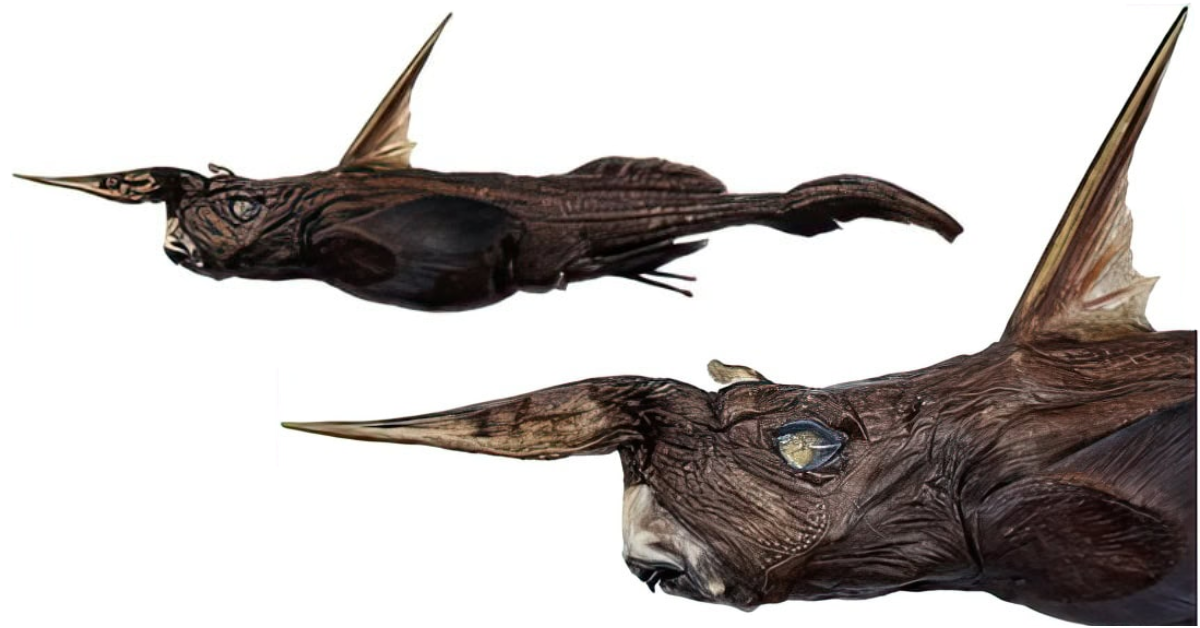

Introduction: A New Mysterious Discovery from the Depths of the Ocean-
Table of Contents
Have you ever imagined that hundreds of meters deep in the ocean could still harbor creatures unknown to science? Recently, scientists discovered one such mysterious species in the deep waters of the Pacific Ocean, sparking excitement in the marine world. This new species has been named Rhinochimaera costaricana, also known as the Deep-sea Ghost Shark or Eastern Pacific Paddlenose Chimaera.
Found in the deep sea off the coast of Costa Rica, this species stands out from other known species due to its unique physical appearance and genetic characteristics. According to scientists, DNA analysis has confirmed that it is a completely new species of the Rhinochimaera group. This discovery is being considered a significant achievement in marine science.
This discovery is not limited to the identification of a new fish; it also provides an opportunity to better understand marine biodiversity. Also, it proves that many unknown creatures and mysteries are still hidden in the depths of the oceans, the discovery of which can set new directions for science in the future.
Our Other Useful Websites-
If you’re looking for information on educational topics, be sure to check out our website, edublog.cloud. Additionally, for digital products, be sure to check out our other website, vijaybooks.store.
Information related to the Meta Glasses is also available on this website.
What is Rhinochimaera Costaricana? Learn about the New Deep-sea Ghost Shark-
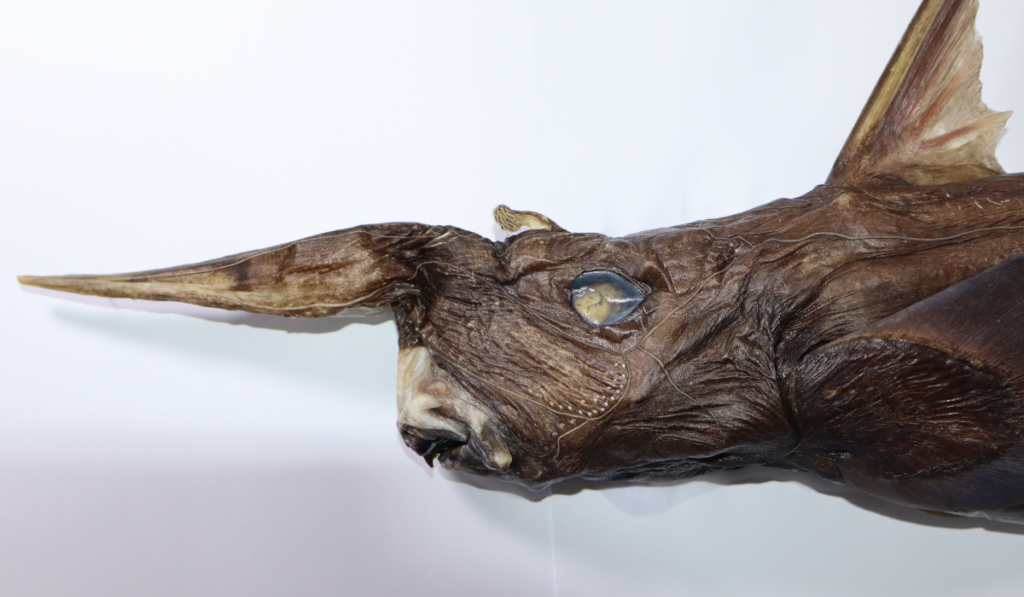
Rhinochimaera costaricana is a recently discovered new deep-sea fish species, commonly known as the Eastern Pacific Paddlenose Chimaera or Deep-Sea Ghost Shark. This species was discovered in the Pacific Ocean region of Costa Rica and is attracting the attention of scientists due to its unique body structure.
Although it is commonly called a “ghost shark,” it is not actually a modern shark species. It belongs to a group of ancient cartilaginous fish called Chimaera. This group evolved millions of years ago and is believed to be related to sharks and rays. For this reason, they are also called distant relatives of sharks.
Ghost sharks are named for their pale color, large eyes, and mysterious appearance. They typically live in deep, dark layers of the ocean, where sunlight does not reach.
The genus Rhinochimaera previously contained only three known species. New DNA analysis and anatomical studies confirmed that Rhinochimaera costaricana is a new species distinct from all three. This discovery not only increases the diversity of the Rhinochimaera group but also draws scientists’ attention to the undiscovered biodiversity hidden in the deep sea.
Where and at What Depth was this New Species Found?
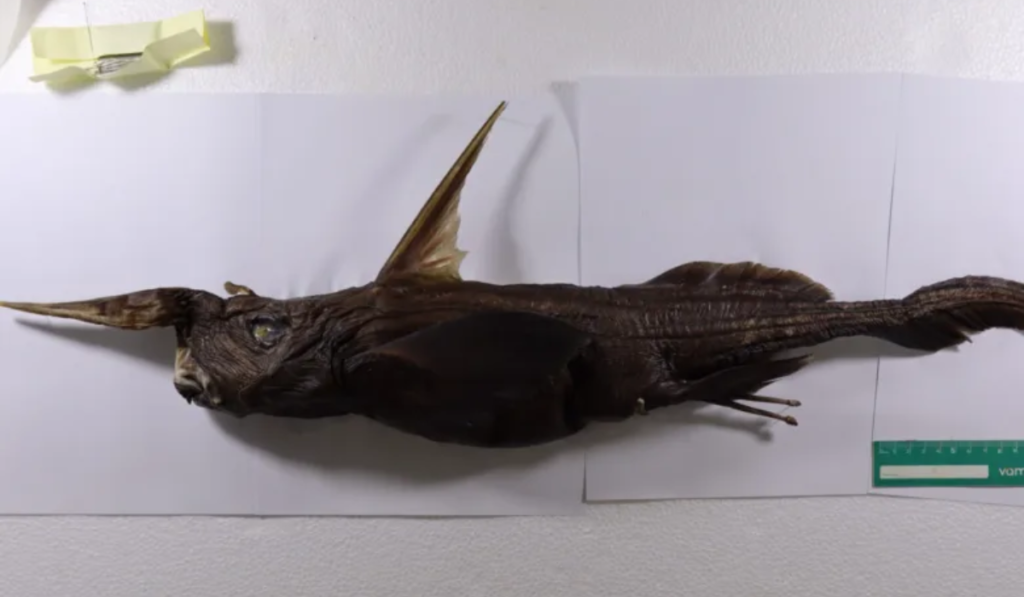
The new deep-sea ghost shark, Rhinochimaera costaricana, was discovered off the Pacific coast of the Central American country of Costa Rica. This region is known worldwide for its rich marine biodiversity and deep-sea ecosystems. Scientists found specimens of this new species specifically in the marine areas of Isla del Caño and Cabo Blanco, which are part of Costa Rica’s Puntarenas Province.
The Puntarenas Province is considered an important area for marine research because it is home to many rare and little-known deep-sea creatures. Researchers collected this new species from depths ranging from 390 to 787 meters (approximately 1,280 to 2,580 feet). At such depths, sunlight is almost nonexistent, making the environment extremely cold, dark, and highly pressurized.
Conducting research under such conditions is not easy. Scientists require specialized deep-sea equipment, advanced sample collection techniques, and expert teams. This is why the discovery of new species found at this depth is considered a major achievement in marine science.
The Dark World of the Ocean: What is Life like at Such Depths?
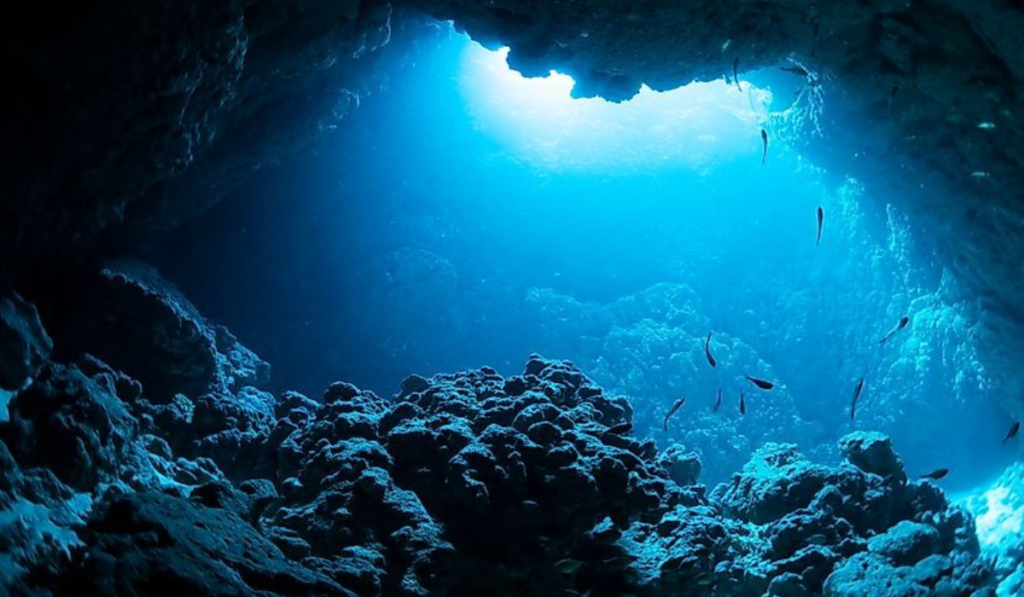
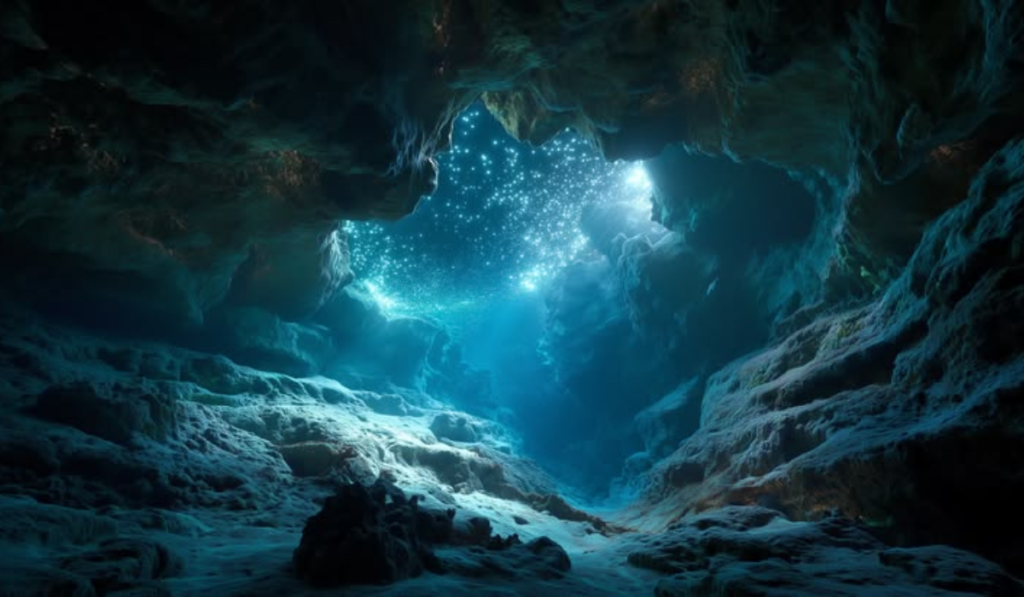
The world deep within the ocean is one of the most mysterious and least explored places on Earth. The environment at depths between 390 and 787 meters is completely different from the surface. Sunlight almost does not reach here, creating a blanket of darkness. This is why this region is often called the “dark world” of the ocean.
The water pressure at such depths is also extremely high. Compared to the ocean surface, the pressure is many times greater, which normal organisms cannot easily withstand. Furthermore, the temperature is also very low, making the conditions for life even more challenging.
Yet, nature has adapted the creatures living here in remarkable ways. Many deep-sea creatures have large eyes, some have soft and flexible bodies, while some species have evolved the ability to survive even with limited food.
Ghost shark species like Rhinochimaera costaricana are extremely important to scientists because they help us understand how life can evolve and survive in some of Earth’s harshest environments. Studying them could reveal many unknown secrets of deep-sea ecosystems.
Why are Deep-sea Ghost Sharks So Fascinating to Humans?
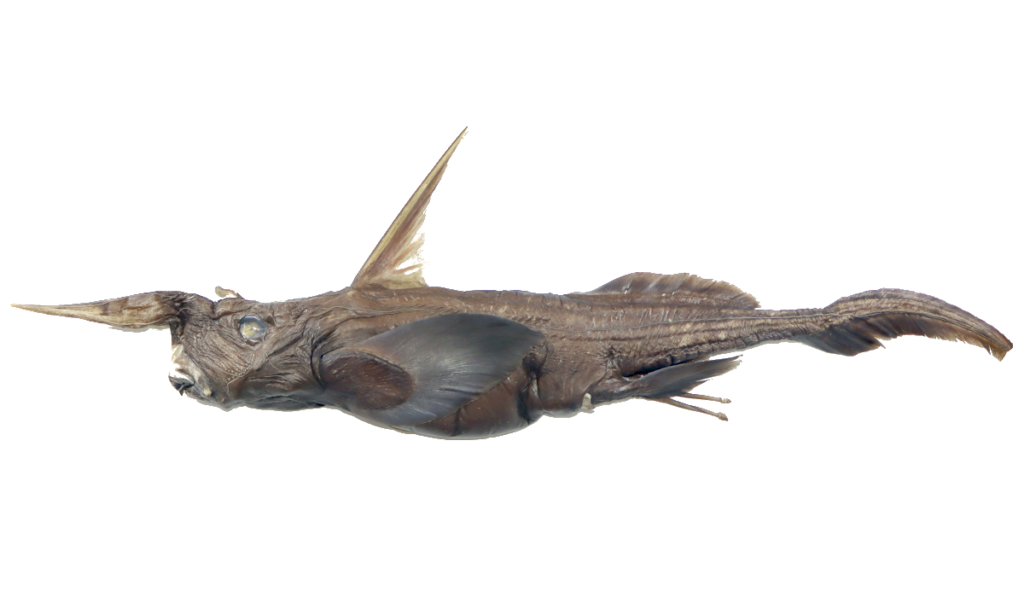
Deep-sea ghost sharks have long been a subject of mystery and fascination for both scientists and the public. The word “ghost” in their name is due to their unusual appearance, pale color, and habitat in the dark depths of the ocean. At first glance, they resemble creatures straight out of a science-fiction film, further fueling people’s curiosity.
The most striking feature of ghost sharks like Rhinochimaera costaricana is their unique appearance. Their long snout, large eyes, and distinctive body structure distinguish them from other marine creatures. Because these creatures live in the deep and nearly dark layers of the ocean, information about them is very limited. This mystery makes them even more intriguing.
Ghost Sharks are important to scientists because they help us understand marine evolution and deep-sea ecosystems. Curiosity about these rare species is also growing among the public.
In the age of social media and digital platforms, whenever a new marine species is discovered, its images and information quickly go viral. This is why mysterious species like the ghost shark become a topic of discussion among both the scientific community and internet users.
How did DNA Testing Prove it was a New Species?
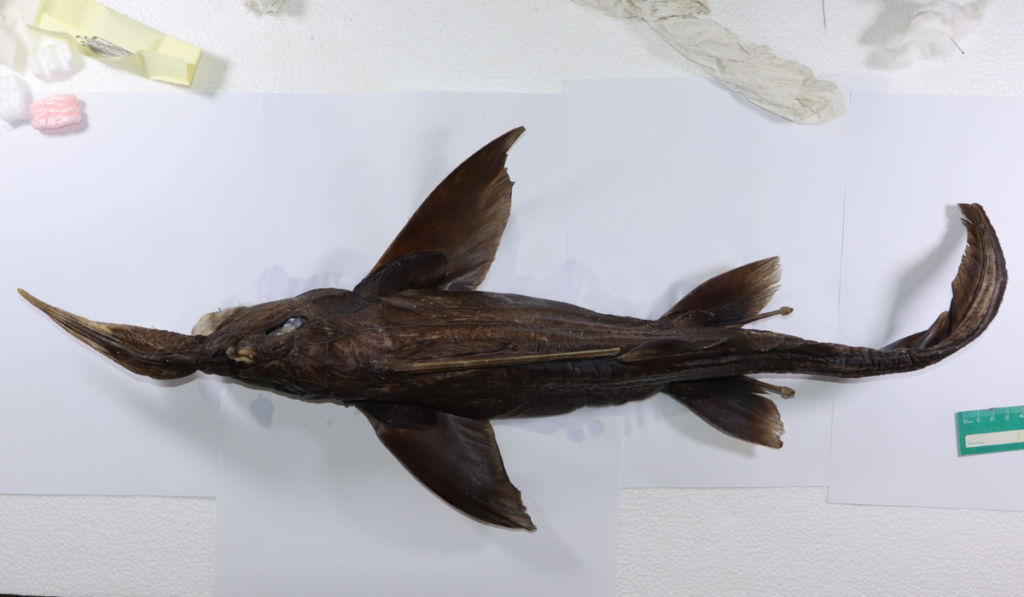
In modern marine research, DNA analysis is considered the most reliable scientific method for identifying new species. Sometimes, two organisms may appear similar, but their genetic properties are completely different. Therefore, scientists don’t rely solely on external appearance, but also conduct detailed DNA analysis.
To discover Rhinochimaera costaricana, researchers carefully studied specimens obtained from the depths of the ocean. First, the fish’s physical characteristics, such as snout length, dorsal spine shape, and fin structure, were analyzed. DNA was then extracted from the tissues and subjected to genetic analysis.
The scientists compared the obtained genetic data with the DNA records of three previously known species of the Rhinochimaera group. This comparison revealed clear differences, indicating that this fish did not match any known species. Furthermore, certain distinctive features of its body also supported the genetic results.
When significant differences are discovered in an organism, both physically and genetically, scientists publish detailed research and have it reviewed by experts. Only after all the evidence is confirmed is it officially declared a new species. It is through this process that Rhinochimaera costaricana was recognized as a new marine species in the scientific world.
Unique Physical Features of Rhinochimaera costaricana-
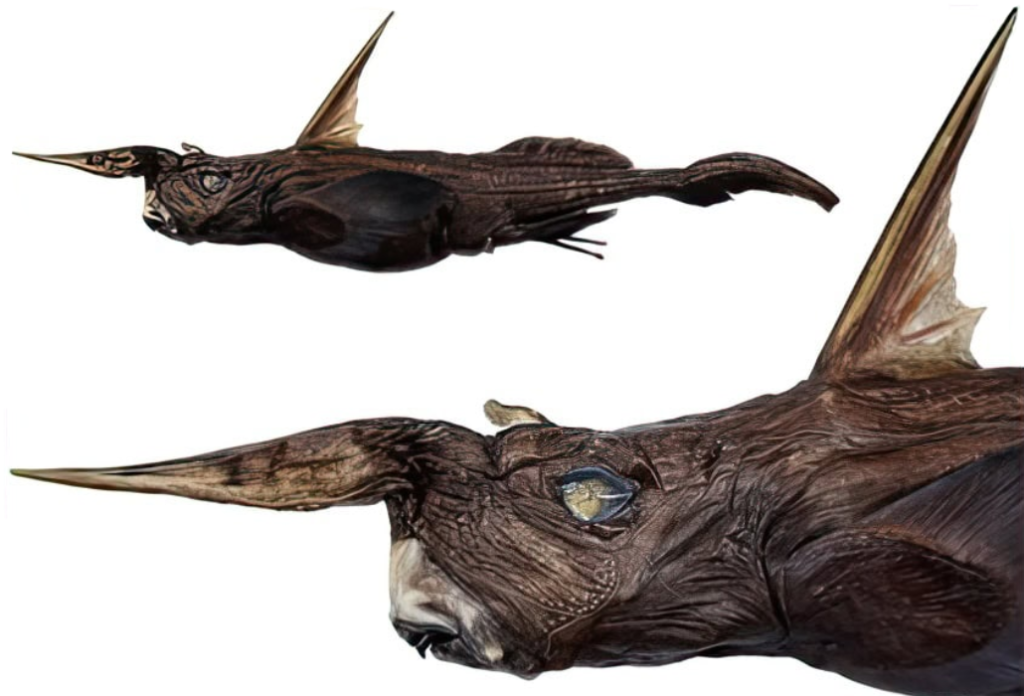
The newly discovered Rhinochimaera costaricana is attracting the attention of scientists due to several physical characteristics that distinguish it from other known species in the Rhinochimaera group. These unique features proved crucial in identifying it as a new species.
The most prominent feature of this species is its short and distinctly shaped snout. Other species in the Rhinochimaera group typically have longer and more prominent snouts, whereas Rhinochimaera costaricana’s snout is relatively short and uniquely structured. This difference served as an important basis for its identification.
In addition, this fish has been found to have large dorsal spines (back spines). These strong spines may help defend against potential predators and also play a role in maintaining the body’s structural strength. Such structures are particularly important in deep-sea environments where survival is challenging.
Another important characteristic is the greater distance between its two dorsal fins. According to scientists, this characteristic clearly distinguishes it from other known species of Rhinochimaera and provides important clues to the new species’ identity.
Its body structure has also evolved to suit deep-sea life. Its body is considered to be specially adapted for survival in environments with low light, high pressure, and limited resources. Scientifically, these features not only clarify their identity but also provide important information for understanding the evolution and adaptations of deep-sea creatures.
Which Scientists and Institutions were Behind this Discovery?

The discovery of Rhinochimaera costaricana was not the work of a single scientist or institution; rather, it is an excellent example of international collaboration. Several prestigious institutions and experts worked together on this important research, resulting in the identification of a new species for marine science.
The University of Costa Rica (UCR) played a key role in this research. University researchers contributed significantly to the study of specimens, species identification, and scientific analysis. UCR has long been actively engaged in research in the field of marine biodiversity, which also benefited this project.
In addition, the Costa Rica Fisheries and Aquaculture Institute (INCOPESCA) assisted in the collection of specimens and provided crucial information on marine areas. The institute’s deep understanding of local marine resources proved extremely useful for this research.
Scientists from the Federal University of Pará, Brazil, were also involved in this project. They contributed significantly to the genetic analysis and scientific verification process, providing a strong foundation for the identification of the new species.
This discovery demonstrates the importance of international collaboration in complex fields like marine science. Only by bringing together expertise from different countries and institutions can the mysteries hidden deep within the oceans be better understood. Such joint research will pave the way for even more important scientific discoveries in the future.
Why is the Discovery of a New Species Important for Marine Science?
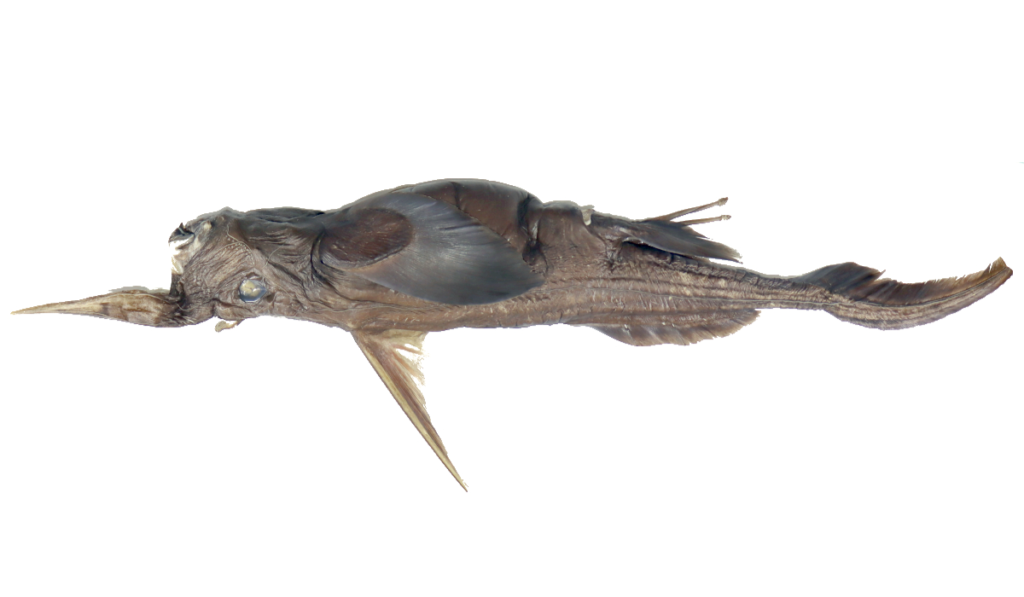
The discovery of Rhinochimaera costaricana is not just the identification of a new fish, but a significant achievement for marine science in many ways. Earth’s oceans remain largely unexplored and poorly understood. Therefore, the discovery of a new species provides scientists with an opportunity to better understand marine biodiversity.
This discovery shows that many organisms still exist in the deep sea that are new to science. By studying organisms living in the dark and harsh conditions of the ocean, scientists can more deeply understand ecosystems, food chains, and the interrelationships of organisms.
In addition, new species also provide important insights into evolution. Studying species like Rhinochimaera costaricana helps us understand how marine organisms have adapted to changing environments over millions of years. This provides new insights into the evolution and genetic history of organisms.
This discovery also opens up new opportunities for future marine research. Scientists can now further study this species’ behavior, habitat, diet, and ecological role. Discoveries like these also highlight the importance of ocean conservation. When new and rare species are discovered, efforts to protect their habitats and conserve marine ecosystems are strengthened.
Will Rhinochimaera Costaricana Shed New Light on the Mysteries of the Deep Sea?
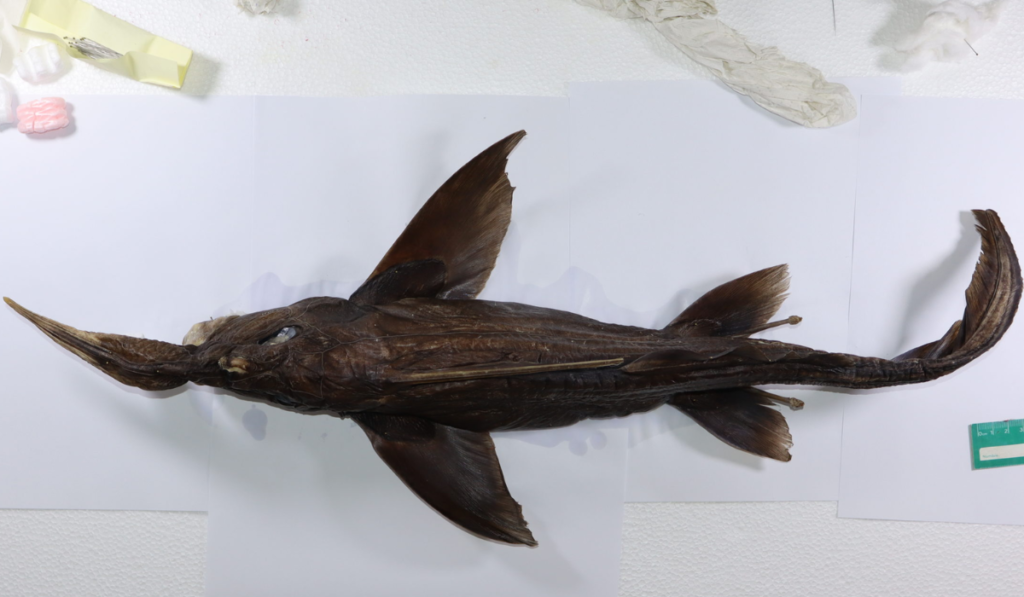
The discovery of Rhinochimaera costaricana not only marks the identification of a new species but also opens new opportunities for deep-sea studies. Scientists believe that a detailed study of this species could help understand the behavior, feeding habits, and ecological importance of organisms living in the depths of the ocean.
Deep-sea creatures survive in harsh conditions such as extreme pressure, low temperatures, and almost complete darkness. Therefore, species like Rhinochimaera costaricana offer an opportunity to learn how life evolves and adapts to extreme environments. Furthermore, this discovery will help scientists understand the evolutionary history of the Chimaera group and the relationships between different species.
Experts believe that as deep-sea research increases, the potential for discovering new species and undiscovered ecosystems will also increase. Therefore, Rhinochimaera costaricana is being considered not just a new fish, but an important step towards understanding the unknown world of the oceans.
Are Thousands of Unknown Species Still Lurking in the Deep Sea?
Scientists believe that Earth’s oceans harbor not just thousands, but possibly millions of species that have yet to be identified. Oceans cover approximately 70 percent of the Earth’s surface, but a large portion remains unexplored. This is why the discovery of new marine species continues unabated.
Scientists have documented millions of marine creatures to date, but experts estimate that many deep-sea creatures remain beyond human knowledge. In particular, deep ocean trenches, remote seamounts, and dark-bottom regions remain largely unexplored.
Modern technology is playing a crucial role in this exploration. Advanced DNA analysis, remote underwater vehicles (ROVs), high-resolution cameras, and deep-sea sampling devices are providing scientists with more accurate information than ever before.
New discoveries like Rhinochimaera costaricana are proof that the oceans still hold many mysteries. In the future, with the help of better techniques and extensive research, many new species are likely to be identified, which can give new direction to marine science.
The Challenge of Environmental Conservation and the Protection of New Species-

As important as the discovery of rare marine species like Rhinochimaera costaricana is, their protection is equally challenging. Marine pollution, particularly plastic waste and chemical waste, is affecting the ecological balance of the oceans. Climate change is also altering sea temperatures, oxygen levels, and marine habitats, which could impact deep-sea life.
Human activities, such as deep-sea mining, overfishing, and the exploitation of marine resources, are threatening many vulnerable species. Therefore, the conservation of newly discovered species and their habitats is crucial.
Efforts such as expanding marine protected areas worldwide, promoting scientific research, and international cooperation are playing a vital role in protecting ocean biodiversity.
Frequently Asked Questions (FAQs) about Rhinochimaera Costaricana Discovery-
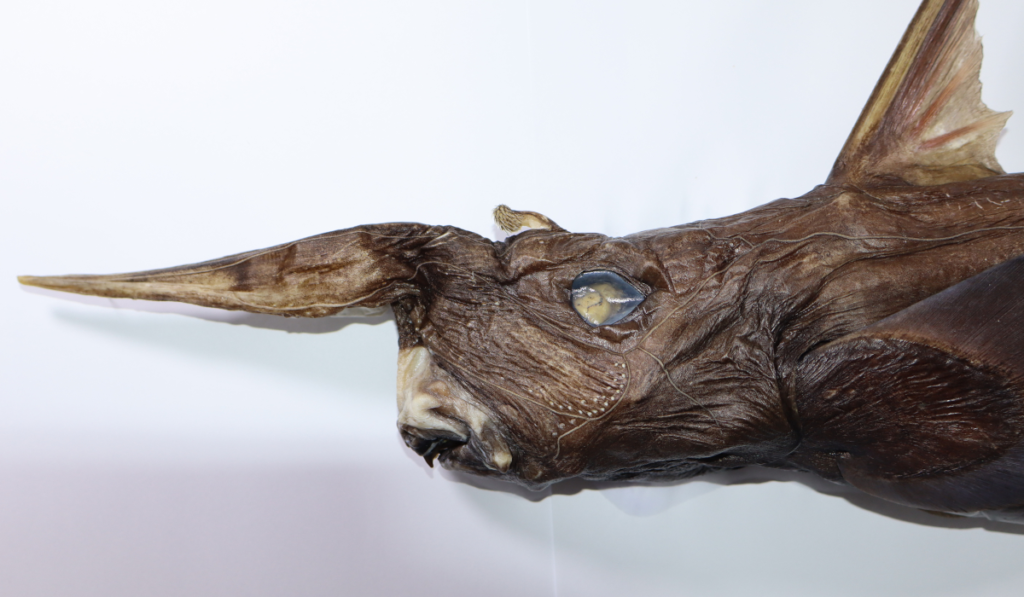
What is Rhinochimaera costaricana?
Rhinochimaera costaricana is a newly discovered deep-sea fish species. It is also known as the Eastern Pacific Paddlenose Chimaera or Deep-Sea Ghost Shark. It is a rare marine creature belonging to the Chimaera group.
Where was the new ghost shark discovered?
This new species was discovered in the Pacific Ocean region of Costa Rica. Specimens were obtained from marine areas near Isla del Caño and Cabo Blanco.
At what depth was Rhinochimaera costaricana found?
Scientists collected Rhinochimaera costaricana from depths of 390 to 787 meters (about 1,280 to 2,580 feet), where there is extreme pressure and almost complete darkness.
Why was the DNA analysis important?
The DNA analysis proved that this species is genetically distinct from the three previously known species of the Rhinochimaera group. Based on this scientific evidence, it was recognized as a new species.
Which institutions were involved in the Rhinochimaera costaricana discovery?
Scientists from the University of Costa Rica (UCR), the Costa Rica Fisheries and Aquaculture Institute (INCOPESCA), and the Federal University of Pará in Brazil jointly contributed to this research.
Is Rhinochimaera costaricana really a shark?
No, it is commonly called a “ghost shark,” but it is not a real shark. It belongs to a group of ancient cartilaginous fish called Chimaera, which are considered distant relatives of sharks and rays.
Conclusion: A Major Achievement in Understanding the Mysteries of the Ocean-
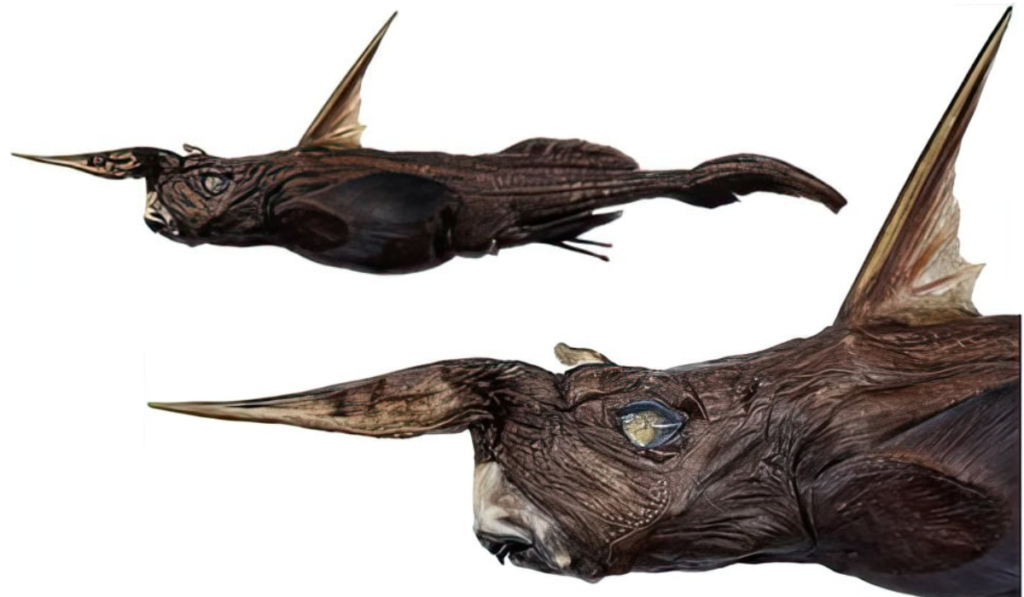
The discovery of Rhinochimera costaricana is one of the most significant achievements in marine science, reminding us that Earth’s oceans still hold countless mysteries. This new deep-sea ghost shark, found in the depths of the Pacific Ocean off Costa Rica, not only marks a new species but also draws scientists’ attention to the vast world of deep-sea biodiversity.
Its identification, based on DNA analysis and physical characteristics, proves that many undiscovered creatures may still lurk in the dark depths of the ocean. In the future, advanced technologies and extensive marine research may yield even more significant discoveries.
This discovery is a message not only for scientists but for all of us about the importance of protecting and studying the oceans. Perhaps the next major discovery of the ocean still awaits us in its depths.