


Introduction-
Table of Contents
Dr. A.P.J. Abdul Kalam is considered one of India’s greatest scientists and most popular presidents. He was a brilliant aerospace scientist, a visionary thinker, an inspiring teacher, and a man of unassuming personality. His significant contributions to reshaping India’s indigenous missile and defense programs earned him the sobriquet “Missile Man of India.” Under his leadership, the country made significant progress in the fields of science, space, and defense technology, further strengthening India’s global recognition. He served as the 11th President of India from 2002 to 2007 and earned the nickname “People’s President” for his humble nature and public relations skills.

Dr. Kalam’s life is a living example of struggle, hard work, discipline, and positive thinking. Despite being born into a humble family, he achieved extraordinary success through his dedication, commitment to education, and hard work. He always inspired young people to dream big, acquire knowledge, and actively contribute to the nation’s development. He believed that the future of any nation depends on the dreams, education, and innovation of its youth.
In this article, you will learn in detail about Dr. A.P.J. Abdul Kalam’s early life, education, inspiring journey to becoming a scientist, his contributions to the missile program, his tenure as President of India, major achievements, famous books, inspiring thoughts, honors, his demise, and invaluable lessons from his life. This article will tell you why Dr. Kalam continues to be a symbol of inspiration, patriotism, and excellence for millions of Indians.
Our Other Useful Websites-
If you’re looking for information on educational topics, be sure to check out our website, edublog.cloud. Additionally, for digital products, be sure to check out our other website, vijaybooks.store.
Information on Chandra Shekhar Azad Jayanti 2026 and Lokmanya Bal Gangadhar Tilak Jayanti 2026 is also available on this website.
Dr. A. P. J. Abdul Kalam’s Early Life-

Dr. A. P. J. Abdul Kalam‘s full name was Avul Pakir Jainulabdeen Abdul Kalam. He was born on October 15, 1931, in Rameswaram, Tamil Nadu, into a humble Muslim family. His father, Jainulabdeen, worked as a boatman, helping locals transport pilgrims, while his mother, Ashiamma, was a homemaker. The family was not financially prosperous, but honesty, discipline, and a spirit of service were highly valued at home.
Dr. Kalam faced financial difficulties as a child. Due to limited family income, he worked as a newspaper distributor at a young age to pay for his education and support his family. Despite difficult circumstances, he never gave up on his education. He believed that only knowledge and hard work could take him to new heights in life.
Dr. Kalam was passionate about studies from childhood. He had a keen interest in mathematics and science, especially in the field of mathematics. He was always eager to learn new things, ask questions, and seek guidance from his teachers. His teachers were also impressed by his dedication, discipline, and desire to learn, and they inspired him to set big goals.
This eagerness to learn, hard work, and positive thinking led him to become one of India’s greatest scientists, the “Missile Man of India,” and the country’s 11th President. His life continues to inspire us that even with limited resources, extraordinary success can be achieved through determination and education.
Education and Student Life-

Dr. A. P. J. Abdul Kalam received his early education at Rameswaram Elementary School in Tamil Nadu. From childhood, he was a brilliant, disciplined, and inquisitive student. He was particularly interested in mathematics and science. His teachers were impressed by his passion for learning and always encouraged him to dream big and work hard.
After completing his schooling, he received a Bachelor of Science (B.Sc.) degree in Physics from St. Joseph’s College, Tiruchirappalli (which was then affiliated with the University of Madras) in 1954. He then enrolled in Aerospace Engineering at the Madras Institute of Technology (MIT), Chennai, to pursue his dreams. This laid a strong foundation for his scientific career.
His student life was not easy. Due to his family’s poor financial situation, meeting the expenses of his studies was challenging. He often faced difficulties in paying his fees, but with the support of his family and his strong will, he continued his education. He made good use of his time and completed each project with diligence and dedication. His talent and dedication also won the trust of his teachers.
Dr. Kalam’s student life teaches us that success is achieved not only through talent, but also through discipline, a desire to constantly learn, hard work, and self-confidence. These qualities led him to become one of India’s greatest scientists, the “Missile Man of India,” and the 11th President of the country. Every student can draw inspiration from his life that education is the strongest foundation for a bright future and nation-building.
Journey to Becoming a Scientist-

After completing his aerospace engineering studies, Dr. A.P.J. Abdul Kalam began his career as a scientist at the Defence Research and Development Organisation (DRDO) in 1958. His first assignment there involved the design and development of a small hovercraft for the Indian Army. Although this project did not meet his expectations, it provided him with practical experience in the field of defence technology and research.
In 1969, he was selected to join the Indian Space Research Organisation (ISRO). This is where his scientific career began to reach new heights. At ISRO, he held important responsibilities as Project Director of India’s first indigenous Satellite Launch Vehicle-3 (SLV-3) project. The mission’s objective was to place a satellite in space using an Indian rocket.
However, this journey to success was not easy. The first launch of the SLV-3 in 1979 did not yield the expected results, and the mission failed. This failure did not discourage Dr. Kalam. He, along with his team, thoroughly analyzed the errors, learned from them, and tried again with complete dedication.
His hard work paid off, and on July 18, 1980, the SLV-3 successfully placed the Rohini satellite into Earth’s orbit. This achievement marked a significant milestone in the history of India’s space program. With this success, Dr. A. P. J. Abdul Kalam became one of the country’s leading scientists and later led India’s missile and defense programs, earning him worldwide fame as the “Missile Man of India.” His scientific journey teaches us that failure is not the end, but the most important step towards success.
How Did He Become India’s Missile Man?

Dr. A.P.J. Abdul Kalam is called the “Missile Man of India” because he played a key role in reshaping India’s indigenous missile program. After achieving success at ISRO, he rejoined the Defence Research and Development Organisation (DRDO) and embarked on the mission of making India’s defense technology self-reliant. His leadership and vision led the country to significant success in developing modern missile technology.
In 1983, the Government of India launched the Integrated Guided Missile Development Programme (IGMDP), which was entrusted to Dr. Kalam. This ambitious program aimed to develop indigenous missiles in India. Under this project, modern missiles such as Prithvi, Agni, Akash, Trishul, and Nag were developed, providing a new strength to India’s defense power.
The Prithvi missile was one of India’s first indigenous surface-to-surface ballistic missiles, enhancing its strategic capabilities. The Agni missile series further strengthened India’s strategic security by providing long-range target engagement capabilities. The success of these missiles sent a message to the world that India was rapidly progressing towards becoming self-reliant in defense technology.
Developed under Dr. Kalam’s leadership, these projects strengthened India’s security system and gave the country a new global identity. His extraordinary scientific achievements, leadership in missile development, and invaluable contribution to strengthening the nation’s defense capabilities earned him the honorary title of “Missile Man of India.” Even today, his contributions are considered among the most inspiring achievements in Indian science and defense history.
Role in the Pokhran Nuclear Tests-

Dr. A.P.J. Abdul Kalam played a key role in India’s Pokhran-2 nuclear tests. As the Chief Scientist of the then Defence Research and Development Organisation (DRDO), he played a key role in these successful nuclear tests, conducted on May 11 and 13, 1998, at the Pokhran Test Site in Rajasthan. In this mission, he, along with the team of scientists, made significant contributions to the planning, technical coordination, and successful execution of the test.
The success of Pokhran-2 provided a new boost to India’s national security. With this test, India demonstrated its modern scientific and technological capabilities for its defense. This enhanced the country’s strategic strength and shaped a new direction for its self-reliant defense policy.
The impact of this historic achievement was not limited to India. Pokhran-2 established India’s global recognition as a strong nuclear power and a nation with advanced scientific capabilities. Although some international sanctions were imposed following this test, India continued to confidently advance in the field of science and technology.
Dr. A.P.J. P.J. Abdul Kalam’s contribution to this mission is considered a prime example of his scientific leadership, vision, and dedication to the nation. This is why he remains one of the most inspiring figures in India’s defense and scientific progress.
Journey to Becoming the 11th President of India-

Dr. A.P.J. Abdul Kalam won the trust of the entire nation through his extraordinary achievements in the fields of science and defense. Given his honest image, simple personality, and dedication to the nation, he was nominated for the presidency of India in 2002. After receiving widespread support, he became the 11th President of India on July 25, 2002. His tenure lasted from 2002 to 2007, during which he elevated the dignity of the presidency to new heights.
Dr. Kalam is called the “People’s President” because he preferred to interact directly with ordinary people, especially students and youth. Instead of confining himself to the formalities of Rashtrapati Bhavan, he visited schools, colleges, and universities across the country, inspiring students to dream big, embrace science, and contribute to the nation’s development. He believed that India’s future depended on the knowledge, innovation, and positive thinking of young people.
As President, he promoted education, science, technological innovation, and the vision of a self-reliant India. Through “Vision 2020,” he presented the vision of making India a developed nation and placed special emphasis on building a knowledge-based society. His tenure is remembered more for its message of education, inspiration, and nation-building than for political controversies. Even today, Dr. A.P.J. Abdul Kalam is remembered as a President who, more than his position, carved a lasting place in the hearts of people through his thoughts, simplicity, and dedication to the youth.
Dr. Kalam’s Thoughts and Philosophy-

Dr. A.P.J. Abdul Kalam’s philosophy of life was based on positive thinking, hard work, education, and national service. He believed that dreams are not what we see while sleeping, but rather dreams that keep us awake. He always inspired young people to set big goals and strive relentlessly to achieve them. According to him, every great achievement begins with a big dream and determination.
Dr. Kalam considered education the greatest power in life. He believed that quality education makes a person self-reliant and lays a strong foundation for the country’s development. He encouraged students to learn new technologies, innovate, and gain practical knowledge rather than limit themselves to books.
Discipline, respect for time, and hard work held special importance in his life. He believed that there are no shortcuts to success; success can only be achieved through continuous hard work, patience, and honesty. By following these values in his life, he set an example for millions of people.
Dr. Kalam’s vision for nation-building was clear. He wanted India to progress as a developed nation, becoming self-reliant in science, technology, education, and innovation. His message to the youth was to use their knowledge, talent, and positive thinking not only for personal success but also for the progress of society and the nation. His vision continues to inspire every generation to move forward with confidence, honesty, and patriotism.
Famous Books by Dr. A.P.J. Abdul Kalam-

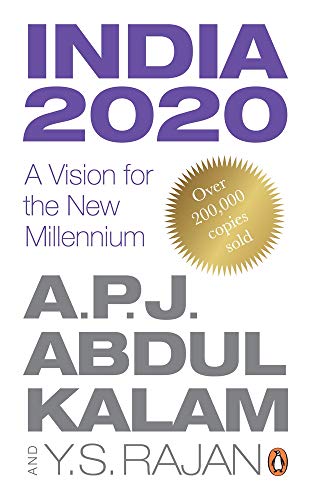
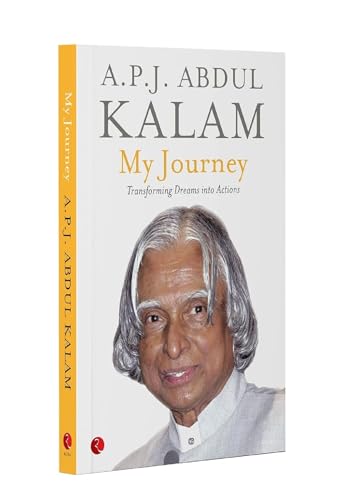
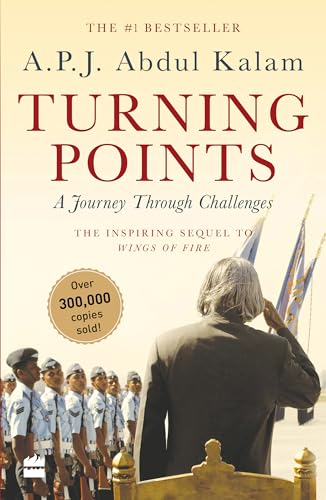
Dr. A.P.J. Abdul Kalam shared his experiences, thoughts, and dreams for the nation’s development through many inspirational books. His most famous book, “Wings of Fire,” is his autobiography, in which he describes his childhood, struggles, education, and inspiring journey to becoming a scientist. In “Ignited Minds,” he shares his thoughts on the potential of youth, innovation, and their role in building a developed India.
Don’t Miss This-
- Hostinger Par Website Kaise Banaye? Beginner Ke Liye Complete Guide

- How to Create a Website on Hostinger? Complete Guide for Beginners

- ISRO Job Vacancy 2026: Recruitment for 658 posts, Apply Process, Exam Pattern, Eligibility, Last Date and Complete Details

- SpaceX Rocket Crashes on the Moon: How Did the Falcon 9 Rocket Hit the Moon? Know the Reasons, Damage, and Complete NASA Information

- Samsung Galaxy F70 Pro 5G: Price, Features, Camera, Battery, Performance and Full Specifications

- All Eclipses of August 2026: Total Solar Eclipse & Partial Lunar Eclipse- Date, Time, Visibility, Scientific Facts, Myths vs Facts, and Impact on India

- Happy Friendship Day 2026: Wishes, Quotes, Shayari, Status, Captions, Date, History, Importance, Theme and Gift Ideas

- Apple Pay Down: How to Fix the “Unable to Connect to Wallet Services” Error? Causes, 12 Easy Solutions, and Prevention Methods (2026 Guide)

- NASA’s Curiosity Mars Rover Discovers Field of Honeycomb Textures: What is the Secret Behind the Unique Structures Found on Mars?

- Samsung Galaxy S25 Ultra and S24 Ultra Complaints: Complete Truth About Battery Drain, Slow Charging, and Overheating

His book, “India 2020,” presents a detailed outline for making India a developed and self-reliant nation. It outlines a plan for the country’s overall development through science, education, agriculture, technology, and industry. In “My Journey,” he presents small incidents from his life and the lessons learned from them in simple language. “Turning Points” is a book based on his journey, experiences, and important decisions after becoming President.
All of Dr. Kalam’s books inspire us to dream big, work hard, respect education, and never give up. Through them, he conveys the message that success is achieved not by talent alone, but by honesty, discipline, a desire to constantly learn, and a dedication to the nation. This is why his books continue to be considered a vital source of inspiration for students, youth, and professionals.
Inspirational Quotes by Dr. Kalam-

Dr. A.P.J. Abdul Kalam’s thoughts continue to inspire millions of people to success, education, and national service. Below are some of his famous quotes and their brief meanings.
- “Dreams are not those that come in sleep, but those that do not let you sleep.”– Set big goals and work hard to achieve them.
- “If you want to shine like the sun, first learn to burn like the sun.”– Struggle is necessary for success.
- “To succeed in your mission, be completely dedicated to your goal.”– Focus completely on the goal.
- “Failure is not the end, but a new beginning.”– Learn from mistakes and move forward.
- “Self-confidence is the first step to success.”– Believe in yourself.
- “Education is the most powerful weapon.”– Knowledge can change lives.
- “Having small goals is a crime.”– Always think big.
- “Only the right use of time leads to success.”– Understand the value of every moment.
- “Honesty and discipline are the foundation of success.”– Character is the greatest asset.
- “Youth are the greatest strength of a nation.”- The future of the country lies in the hands of the youth.
- “Never stop learning.”– Continuous learning is the key to development.
- “There is no alternative to hard work.”– Success is achieved only through hard work.
By adopting these ideas in daily life, anyone can achieve their goals through self-confidence, discipline, positive thinking, and continuous effort and can make a meaningful contribution to the development of society and the nation.
Awards and Honors-

Dr. A. P. J. Abdul Kalam received numerous prestigious national and international honors for his outstanding contributions to science, space, defense technology, and nation-building. The Government of India honored him with the Padma Bhushan in 1981, the Padma Vibhushan in 1990, and the Bharat Ratna, the country’s highest civilian honor, in 1997. These honors were bestowed for his scientific leadership, indigenous missile program, and invaluable contributions to strengthening India’s defense capabilities.
In addition to these highest honors, Dr. Kalam was awarded honorary doctorates by numerous universities in India and abroad. He also received numerous prestigious honors, including the Indira Gandhi National Unity Award, the Veer Savarkar Award, and the Ramanujan Award. Academic and scientific institutions worldwide recognized his knowledge, leadership, and inspiring personality.
Dr. A. P. J. Abdul Kalam’s awards are not only a symbol of his personal achievements, but also a hallmark of India’s scientific progress, self-reliance, and innovation. His life still gives the message that true hard work, dedication, and honest work one day bring respect in the entire country and the world.
Death and His Immortal Legacy-

Dr. A.P.J. Abdul Kalam passed away on July 27, 2015, in Shillong, Meghalaya. He was delivering a lecture on “Building a Livable Planet” to students at the Indian Institute of Management (IIM) Shillong. During the lecture, he suffered a cardiac arrest and was immediately rushed to the hospital, but doctors could not save him. His dedication to imparting knowledge and inspiration to students until his death is considered a testament to his love for education and devotion to the nation.
His death sent shockwaves through the nation. The Government of India declared a seven-day state mourning period, and his funeral was held with full state honors in Rameswaram, Tamil Nadu. Every year, on July 27, his death anniversary, schools, colleges, and various institutions across the country pay tribute to him. Many educational institutions organize inspirational programs, science exhibitions, and student activities on this day as Dr. A.P.J. Abdul Kalam Memorial Day.
Dr. A.P.J. Abdul Kalam continues to live in the hearts of millions today for his simplicity, honesty, scientific thinking, and inspiring personality. His thoughts, books, and messages for the youth inspire the new generation to dream big, acquire knowledge, and contribute to the nation’s development. This is his greatest and immortal legacy.
10 Important Lessons from Dr. A.P.J. Abdul Kalam-

Dr. A.P.J. Abdul Kalam’s life will always be remembered not only for his scientific achievements but also for his ideals and values. His life offers many important lessons for everyone, especially youth and students.
- Dream big– Always set lofty goals and have the courage to achieve them.
- Never give up hard work– There are no shortcuts to success; continuous hard work is the key.
- Learn from failure– Don’t consider failure a defeat, but an opportunity for a new beginning and learning.
- Prioritize education– Knowledge and education are the most effective means to guide life.
- Put national service first– Use your talents and skills for the nation’s progress.
- Respect time– Only those who utilize time wisely achieve their goals.
- Remain humble– Maintain simplicity and humility even after achieving great success.
- Think positively– Maintain confidence and a positive attitude even in difficult situations.
- Keep learning continuously– Never give up the habit of learning new things throughout your life.
- Make honesty the foundation of your life– Integrity, morality, and honesty are the true hallmarks of lasting success.
These teachings of Dr. A. P. J. Abdul Kalam continue to inspire millions. If these principles are adopted in daily life, not only can personal success be achieved, but significant contributions can also be made to the development of society and the nation.
Frequently Asked Questions (FAQ) about Dr. A. P. J. Abdul Kalam-

When and where was Dr. A. P. J. Abdul Kalam born?
Dr. A. P. J. Abdul Kalam was born on October 15, 1931, in Rameswaram, Tamil Nadu. His full name was Avul Pakir Jainulabdeen Abdul Kalam, and he came from a humble family.
Why is Dr. Kalam called the “Missile Man of India”?
Dr. Kalam played a key role in the development of India’s indigenous missile program. Under his leadership, several modern missiles, including Agni and Prithvi, were successfully developed, strengthening India’s defense capabilities. This is why he is called the “Missile Man of India.”
When did Dr. Kalam become the President of India?
Dr. A. P. J. Abdul Kalam became the 11th President of India on July 25, 2002. His tenure lasted from July 25, 2002, to July 25, 2007. He also became known as the “People’s President” due to his simplicity and connection with the youth.
When did Dr. Kalam receive the Bharat Ratna?
Dr. A.P.J. Abdul Kalam was awarded India’s highest civilian honor, the Bharat Ratna, in 1997. This honor was given to him for his outstanding contributions to science, defense technology, and the country’s missile program.
What is Dr. Kalam’s most famous book?
Dr. Kalam’s most popular book is “Wings of Fire.” This is his autobiography, in which he describes his childhood, struggles, education, and inspiring journey to becoming a scientist. This book is still considered an important source of inspiration for students and youth.
Conclusion-

Dr. A.P.J. Abdul Kalam’s life is a living example of how determination, hard work, honesty, and education can lead anyone to extraordinary success. His journey from a humble beginning to becoming India’s greatest scientist, the “Missile Man of India,” and the country’s 11th President is a source of inspiration for every Indian. His contributions to science, defense, education, and nation-building will forever be remembered in golden letters in India’s history.
Dr. Kalam was not just a scientist or a president, but a mentor and inspiration to millions of young people, giving new wings to their dreams. He always preached the message of dreaming big, constantly learning, hard work, and playing our part in the nation’s development. His ideals continue to inspire every generation to move forward with positive thinking and confidence.
If we look at Dr. A.P.J. If we embrace Abdul Kalam’s ideals, discipline, honesty, and spirit of national service, we can not only achieve personal success but also make a significant contribution to building a developed, self-reliant, and strong India. This will be a true tribute to him.