

Introduction-
Table of Contents
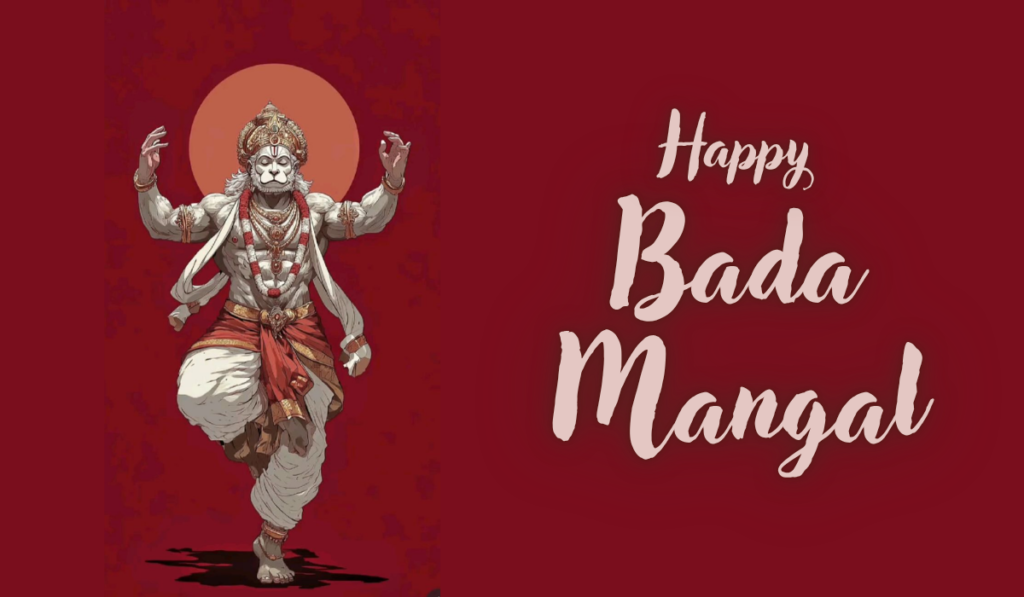
Bada Mangal, also known as “Budhwa Mangal,” is a major religious festival celebrated with great devotion and enthusiasm in North India. It is dedicated to Lord Hanuman every Tuesday of the month of Jyeshtha, but among these Tuesdays, “Bada Mangal” is considered the most significant. On this day, devotees perform special prayers to Lord Hanuman and organize feasts and charity events with a spirit of service.
The meaning of the term “Budhwa Mangal” is rooted in folk beliefs. The name “Budhwa Mangal” is based on the popular belief that this festival symbolizes a long-standing tradition started by the elders, hence it is called “Budhwa Mangal of the Elders.” In some places, it is also considered a symbol of experience and faith. This festival is celebrated with great pomp and show, especially in Lucknow and surrounding areas, where feasts, sherbet distribution, and religious events are held at various places. In 2026, ‘Bada Mangal’ will be celebrated with special faith and enthusiasm, and preparations are already underway.
Religiously and culturally, Bada Mangal symbolizes devotion, service, and social unity, inspiring people to both faith and charity. This festival is celebrated only on Tuesdays, as Tuesdays are dedicated to Lord Hanuman. It is believed that worshipping him on this day brings special benefits and relief from troubles.
In this blog, we will explore the date, significance, method of worship, and interesting stories associated with Bada Mangal 2026 in detail.
Bada Mangal 2026 Date and Panchang Details-
In the year 2026, Bada Mangal (Budhwa Mangal) is scheduled to be celebrated on all Tuesdays of the Jyeshtha month and Malmas. All Tuesdays falling during this period are celebrated with reverence and devotion as Bada Mangal. These are considered especially auspicious for the worship of Lord Hanuman. Worshipping Lord Hanuman during this time is considered especially fruitful.
In the year 2026, eight Bada Mangal festivals are scheduled to be celebrated on all Tuesdays of the month of Jyeshtha and Malmas from May 5, 2026, to June 23, 2026. This rare event, occurring once in 19 years due to Malmas, is associated with special worship of Lord Hanuman, which includes rituals such as fasting, charity, and public distribution of food.
Scheduled dates for Bada Mangal in the year 2026-
According to the Hindu calendar, the Jyeshtha month and Malmas, the eight Tuesdays are as follows:
- First Bada Mangal- May 5, 2026
- Second Bada Mangal- May 12, 2026
- Third Bada Mangal- May 19, 2026
- Fourth Bada Mangal- May 26, 2026
- Fifth Bada Mangal- June 2, 2026
- Sixth Bada Mangal- June 9, 2026
- 7th Bada Mangal- June 16, 2026
- 8th Bada Mangal- June 23, 2026
According to the Hindu calendar, Budhwa Mangal is considered extremely sacred and energetic for fasting and worship. The intensity of the Sun is at its peak during this time, so worshipping Lord Hanuman is believed to provide mental and physical strength. Morning is considered the best time for this. After sunrise, one should bathe and begin the puja with a pure heart. Brahmamuhurta and the early morning are particularly auspicious for worshipping Lord Hanuman.
The sunrise time and the puja muhurta are of particular importance, as devotion performed during these times is considered more fruitful. Worship performed with devotion, discipline, and a true heart on this day is believed to fulfill wishes.
Religious Significance of Bada Mangal-
Bada Mangal is considered extremely important for the worship of Lord Hanuman. Worshipping him on this day brings special merit. Hanuman is considered a symbol of strength, courage, and devotion, so worshipping him infuses positive energy and self-confidence into one’s life.
Benefits of Worship-
It is believed that performing the puja properly on Bada Mangal brings relief from all kinds of troubles and obstacles. Devotees observe a fast on this day and recite the Hanuman Chalisa and Sunderkand, which bring mental peace and spiritual balance.
Hanuman’s Role as the Reliever of Troubles-
Hanuman is called “Sankat Mochan,” meaning he removes all the troubles of his devotees. Anyone who worships him with a true heart and devotion finds their problems gradually disappearing. This is why temples are so crowded on Bada Mangal.
The Faith and Belief of Devotees-
The faith and belief of devotees are the greatest strength of this festival. People come to Hanuman’s court with their wishes and hope for their fulfillment. Furthermore, it is believed that chanting, penance, charity, and worship performed on this day destroy sins and fulfill wishes. Bada Mangal is not only an occasion for worship, but also an important occasion for self-purification and service.
Mythological Tales Related to Bada Mangal-
Bada Mangal is also linked to the ancient religious text, the Ramayana. It describes the extraordinary devotion and immense power of Lord Hanuman. Hanuman displayed complete devotion to his beloved Lord Shri Ram and stood by him through every difficult situation. Acts like burning Lanka, bringing the Sanjivani herb, and finding Sita Mata reflect his immense strength and devotion. This is why worshipping him on Bada Mangal bestows both courage and devotion.
Lucknow’s Historical Tale-
Bada Mangal is celebrated with great pomp in Lucknow, the capital of Uttar Pradesh. According to a popular legend, a Nawab was relieved of a serious crisis by the grace of Lord Hanuman. Afterward, he built a Hanuman temple and began this tradition. Since then, feasts, sherbet distribution, and grand celebrations have been held on Bada Mangal, which continue to this day.
Folk Tales-
According to folklore, the name ‘Budhwa Mangal’ reflects the antiquity of this festival. Elders believe that this tradition has been passed down for generations, and that experience and faith hold special significance. Some legends also say that this day symbolizes the blessings of elders and respect for their traditions. All these stories further enhance the religious and cultural significance of Bada Mangal.
Why is Bada Mangal celebrated?
There are deep spiritual, social, and cultural reasons behind celebrating Bada Mangal.
Spiritual Reasons-
From a spiritual perspective, this day is considered highly auspicious for the worship of Lord Hanuman. Worshipping him on this day is believed to bring mental peace, courage, and protection from negative forces. Devotees experience positive energy in their lives by observing a fast and performing devotional prayers.
Social and Cultural Reasons-
Socially and culturally, Bada Mangal symbolizes unity and cooperation. On this day, people from all walks of life organize community feasts, which are attended by people from all walks of life without any discrimination. This tradition promotes brotherhood and harmony in society.
Message of Devotion and Service-
Bada Mangal conveys the message of devotion as well as service. Not only worship on this day, but helping others is also considered equally important. This is why people donate generously. Helping the poor and helpless is considered the main objective of this festival. By distributing food, water, and essential items, people serve humanity. Thus, Bada Mangal is not only a religious celebration but also a symbol of compassion, service, and humanity.
Bada Mangal Vrat Vidhi (Puja Vidhi)-
The Bada Mangal fast is observed to receive the special blessings of Lord Hanuman. Performing the puja ritual on this day brings peace, self-confidence, and positive energy.
1. Preparation for the Fast-
Devotees observing the fast on this day should wake up in the morning during Brahma Muhurta. First, they bathe and purify their body and minds. Afterward, clean, preferably red or yellow, clothes are worn, which are considered auspicious. Cleaning the house or temple before the puja is also considered essential to maintain a positive atmosphere.
2. Puja Samagri-
Specific materials with religious significance are used for the puja. It includes vermilion, jasmine oil, red flowers, incense sticks, and boondi or laddus as offerings. Offering vermilion and jasmine oil to Hanuman is considered highly auspicious.
3. Worship Process-
The puja begins by lighting a lamp in front of the idol or picture of Hanuman. The Hanuman Chalisa is then recited with devotion, and if possible, the Sunderkand is also recited. During the puja, one expresses one’s wishes to the Lord. Finally, aarti is performed, followed by offering boondi or laddus as prasad, and the prasad is distributed to all.
4. Rules of the Fast-
During the fast, devotees can observe a fruit-based or waterless fast, depending on their faith. One should eat sattvic food and avoid tamasic foods. Most importantly, maintain purity in thought, word, and deed, and remain immersed in devotion with positive thoughts throughout the day.
What to Do and What Not to Do on Bada Mangal-
On Bada Mangal, devotion and correct conduct are of particular importance. Actions performed on this day are considered to have a profound spiritual impact, so it’s important to keep a few things in mind.
What to Do-
On this auspicious day, wake up early in the morning, take a bath, and visit the nearest Hanuman temple to offer prayers. Visiting and worshipping Lord Hanuman brings peace to the mind. Feeding the needy, distributing water, or sherbet is considered highly virtuous. Additionally, singing bhajans, kirtans, and reciting the Hanuman Chalisa creates a positive and devotional atmosphere.
What Not to Do-
On this day, one should completely abstain from tamasic foods such as meat and alcohol. This day symbolizes purity and restraint. Lying, getting angry, or mistreating anyone is also considered inappropriate on this day. One should also avoid insulting or disrespecting anyone, as this is contrary to the spirit of devotion.
Thus, by following the right actions and avoiding bad habits, one can reap the full spiritual benefits of Bada Mangal.
Donations on Bada Mangal-
Charity holds special significance on Bada Mangal. Donations made on this day are considered to be manifold more fruitful, which is why devotees enthusiastically participate in charitable activities.
- Due to the intense heat, distributing water and sherbet is one of the most prominent charitable acts during this time. People set up drinking water stalls at various places to offer cold water and sherbet to passersby, providing relief and earning merit.
- Additionally, organizing a community feast is a special tradition on this day. Food is provided to people from all walks of life without discrimination. Feeding the poor and the destitute is considered one of the most virtuous acts on this day, as it is considered the highest form of human service.
- Many people also donate clothes, fruits, and other essential items on this day. This helps those in need and fosters a spirit of cooperation in society.
- Religiously, charity is considered a means of eradicating sins and accumulating virtue. It is believed that giving with a sincere heart brings happiness, peace, and prosperity to a person’s life. Thus, Bada Mangal is an inspiring festival that promotes service, compassion, and humanity.
Celebration in Lucknow and North India-
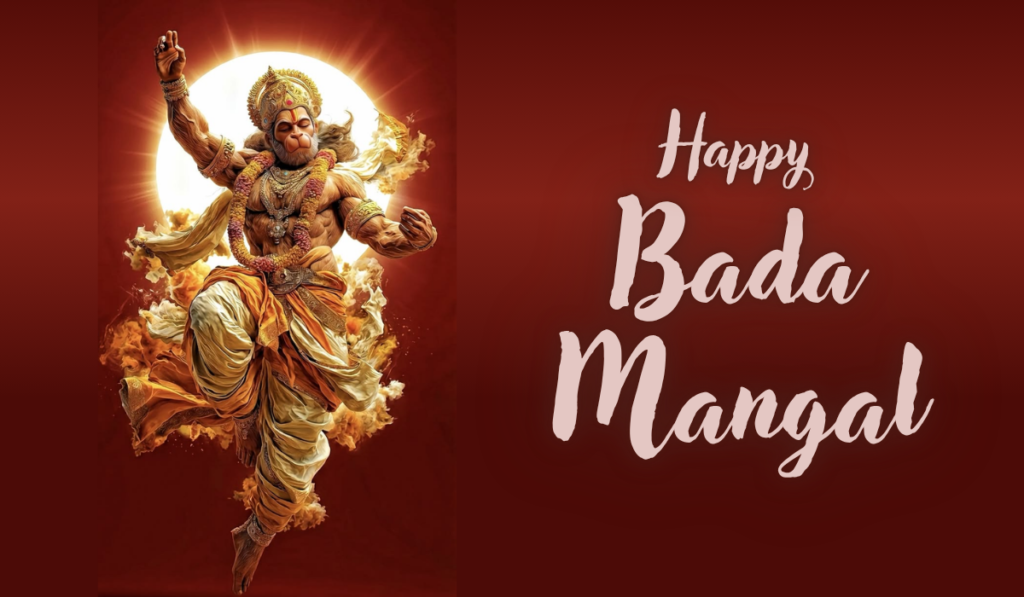
The Bada Mangal celebration in Lucknow is renowned throughout North India for its grandeur and special traditions. On this day, the city’s atmosphere becomes completely devotional. From the streets to the lanes, chants of Lord Hanuman are heard everywhere, and people celebrate this festival with great enthusiasm.
Bhandaras are organized at various places in Lucknow on Bada Mangal. Devotees and social organizations come together to provide food, water, and sherbet for passersby. This spirit of service is the hallmark of this festival.
Hanuman temples are specially decorated on this day. With flowers, lights, and devotional music, the atmosphere becomes extremely attractive and spiritual. Devotees begin arriving at temples early in the morning for darshan, leading to long queues at many places.
Despite the large crowds of devotees, order and discipline are maintained, which is a special feature of this festival. People help each other without any discrimination and work together to make this festival a success.
Bada Mangal is not only a religious event, but also a symbol of social unity and brotherhood, inspiring people to live together and serve others.
Bada Mangal and Social Service-
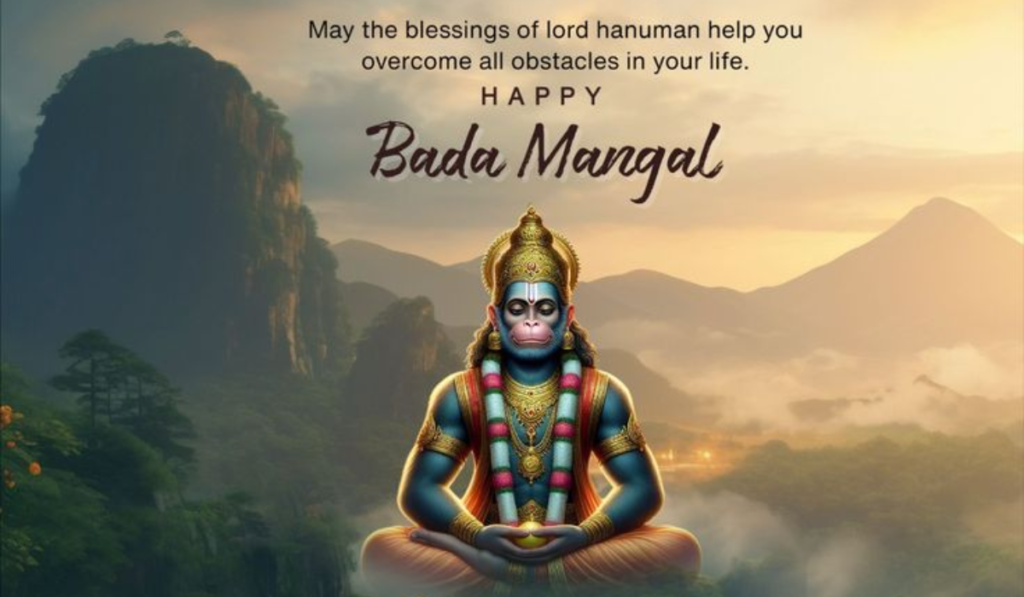
Bada Mangal is not only a festival of religious faith, but it also encourages social service and philanthropy.
- Service holds special significance on this day, as it is believed that true devotion involves helping others. Along with the worship of Lord Hanuman, helping the needy is a key hallmark of this festival.
- Community feasts are the most prominent social aspect of this day. Food is served to people from all walks of life without any discrimination. This tradition not only provides food to the hungry but also spreads the message of equality and brotherhood in society.
- Youth and various social organizations also play an active role on this occasion. They collectively distribute water, sherbet, fruits, and food, further expanding the service. This participation of youth reflects their responsibility towards society.
- Bada Mangal gives us the message of humanity and cooperation. It teaches us that true religion is not limited to worship; rather, showing kindness, compassion, and helpfulness towards others is the greatest devotion.
Special Offerings and Prasad of Bada Mangal-
Special offerings are offered to Lord Hanuman on Bada Mangal, which have religious and traditional significance.
- The most popular offerings on this day include boondi and gram flour laddus. It is believed that Hanumanji is very fond of these offerings, so devotees offer them with devotion.
- Additionally, prasad of chickpeas and jaggery is also specially offered. This is considered a simple and sattvic offering, symbolizing devotion and simplicity. In many places, the tradition of distributing jaggery along with roasted chickpeas is also observed.
- Keeping in mind the summer season, the distribution of sherbet and thandai is also a special feature of Bada Mangal. Devotees express their service by offering cold drinks to passersby and the needy, bringing them relief and satisfaction.
The significance of prasad is not limited to food; it symbolizes faith and blessings. Devotees believe that consuming prasad brings positive energy and God’s blessings. Thus, the prasad and offerings of Bada Mangal represent a beautiful confluence of devotion, service, and tradition.
Popular Mantras and Recitations Associated with Bada Mangal-
Various mantras and recitations hold special significance for receiving the blessings of Lord Hanuman on Bada Mangal.
- On this day, devotees recite the Hanuman Chalisa with devotion, which describes the glory and prowess of Hanuman. Regular recitation brings peace to the mind and positive energy to life.
- Additionally, reciting the Bajrang Baan is also considered very effective. This recitation is especially done to overcome difficult situations and obstacles. The Sunderkand is an important part of the Ramayana, which describes the miraculous deeds of Hanuman. Reciting it on Bada Mangal is considered extremely auspicious and fruitful.
- Chanting the simple and effective mantra “Om Hanumate Namah” also provides special benefits on this day. Continuous chanting of this mantra increases mental concentration and relieves fear, stress, and negative thoughts.
The benefits of chanting mantras are not only spiritual but also significant for mental and emotional well-being. It boosts self-confidence, stabilizes the mind, and helps bring peace and balance to life.
If you’re looking for information on educational topics, be sure to check out our website, edublog.cloud. Additionally, for digital products, be sure to check out our other website, vijaybooks.store.
More information related to the International Firefighters Day 2026 is also available on this website.
Frequently Asked Questions (FAQs)-
When is Bada Mangal celebrated?
Bada Mangal is celebrated every Tuesday of the month of Jyeshtha. It usually falls in the months of May-June, and all Tuesdays during this period are considered special.
Why is it called Budhwa Mangal?
The name “Budhwa Mangal” is associated with folk traditions. It is believed that this festival is part of an ancient tradition, started by elders and passed down from generation to generation, hence its name.
Is fasting necessary on this day?
Fasting is not mandatory, but it is considered extremely auspicious. Devotees can observe the fast according to their faith and ability, or they can simply pray and seek the blessings of Lord Hanuman.
Can women fast?
Yes, women can also observe the Bada Mangal fast with full devotion. There is no discrimination in worship and devotion on this day.
Conclusion-
Bada Mangal is not just a religious festival, but a wonderful confluence of faith, service, and dedication. This day inspires strength, courage, and positive thinking through devotion to Lord Hanuman. It also teaches us that true worship isn’t limited to temples, but also lies in serving the needy.
This sacred occasion of devotion and charity infuses positive energy into society. People come together to organize feasts, help the needy, and foster a spirit of love and cooperation. This is why this day has also become a symbol of social unity.
To make Bada Mangal even more special in 2026, consider participating not only in worship but also in social service activities. Even small gestures, such as providing water or food, can make a big difference.
“Service is the greatest worship,” and this is the true meaning of Bada Mangal.